
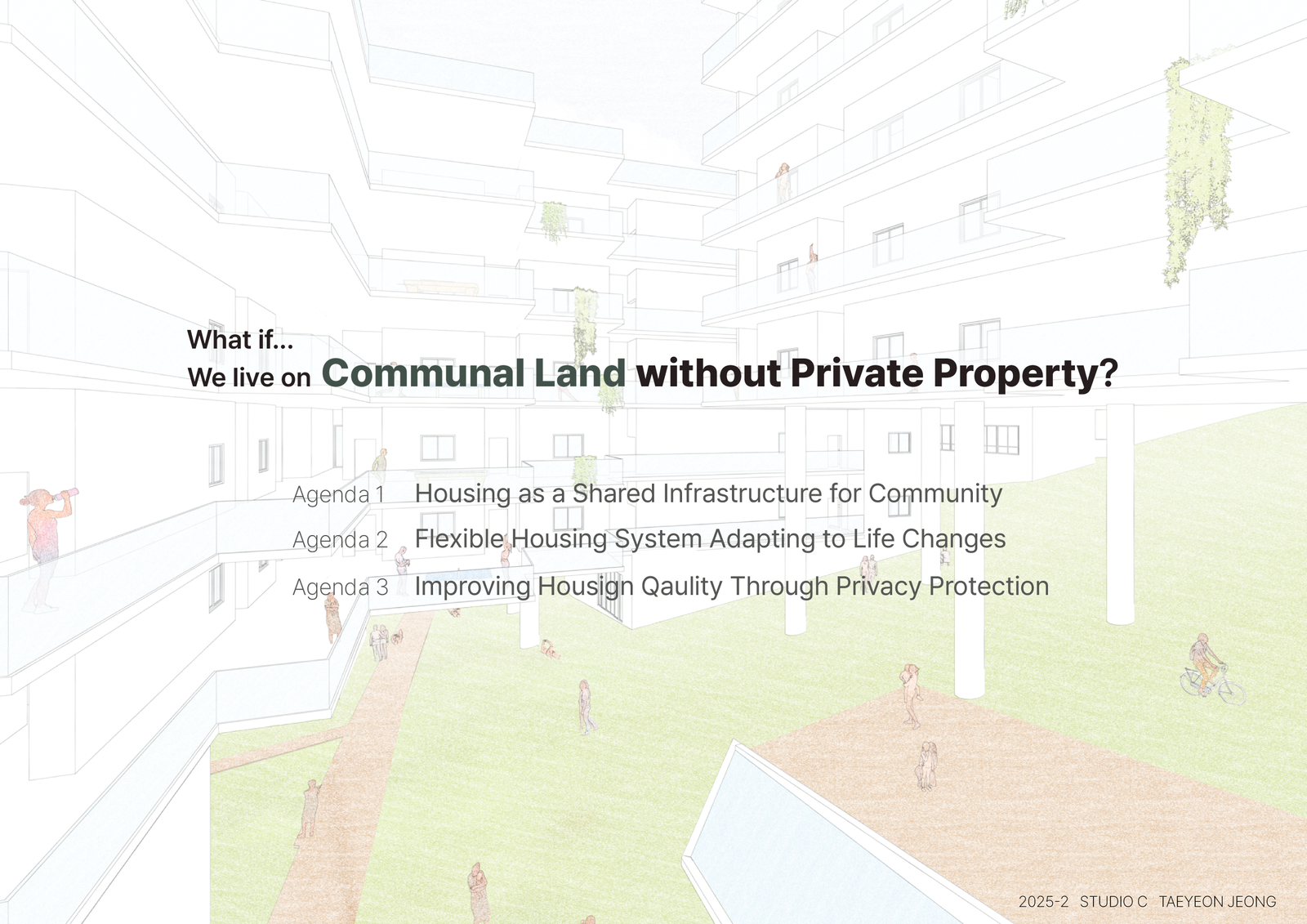
My project starts with a team question: What if we live on communal land without private property?
To explore this, we focused on three main agendas:
1. First, Housing as a Shared Infrastructure for community.
2. Second, a Flexible Housing System that adapts to life changes.
3. And third, Improving Housing Quality through privacy protection.
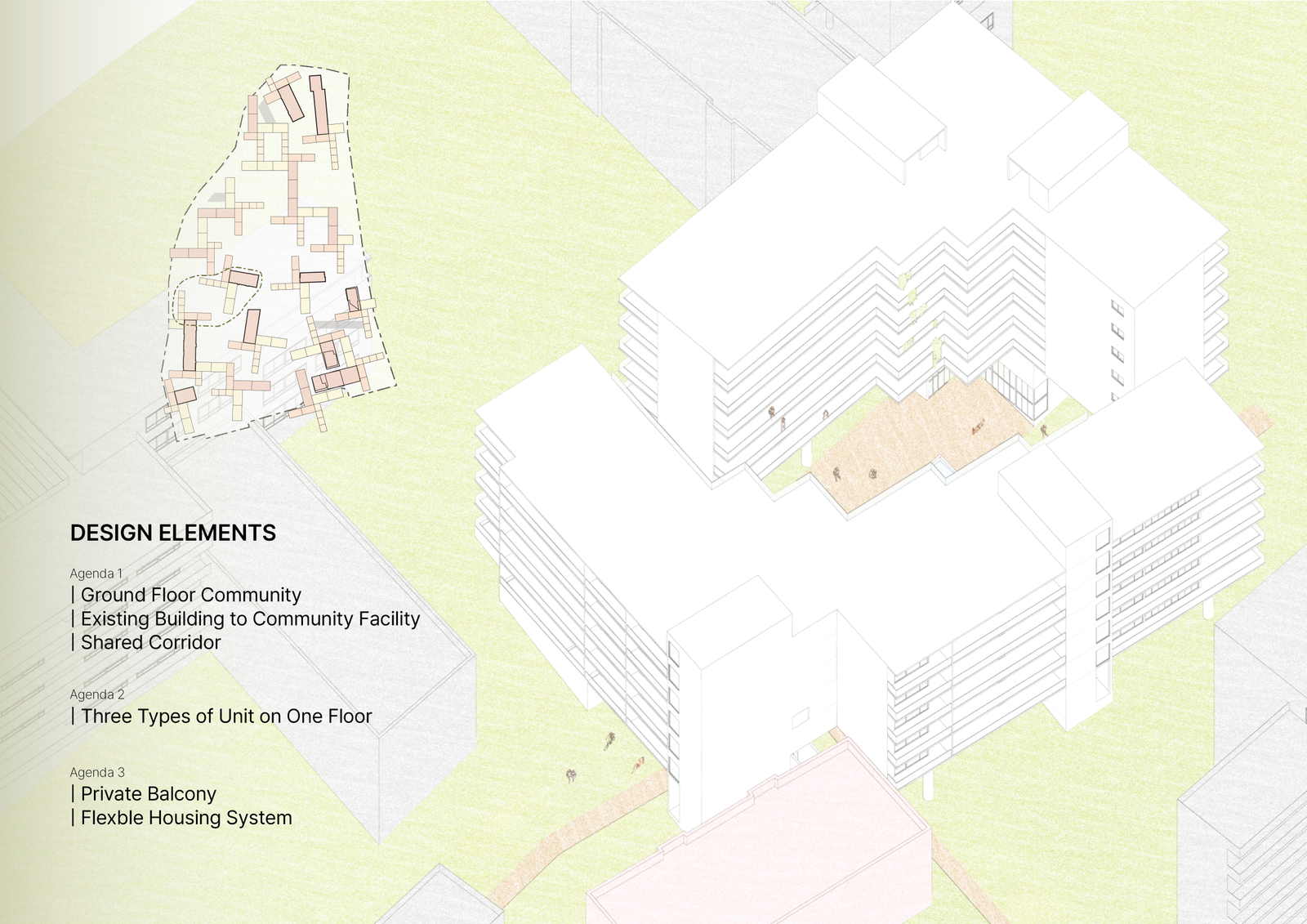
This is the overall mass model of my design. It is located at the entrance of Baebongsan trail and has a sloped site with a central courtyard.
To achieve our agendas, I used these design elements:
For Community, I planned ground floor community spaces and shared corridors.
For Flexibility, I designed three different unit types on each floor.
For Privacy, each unit has a private balcony and a flexible system inside.
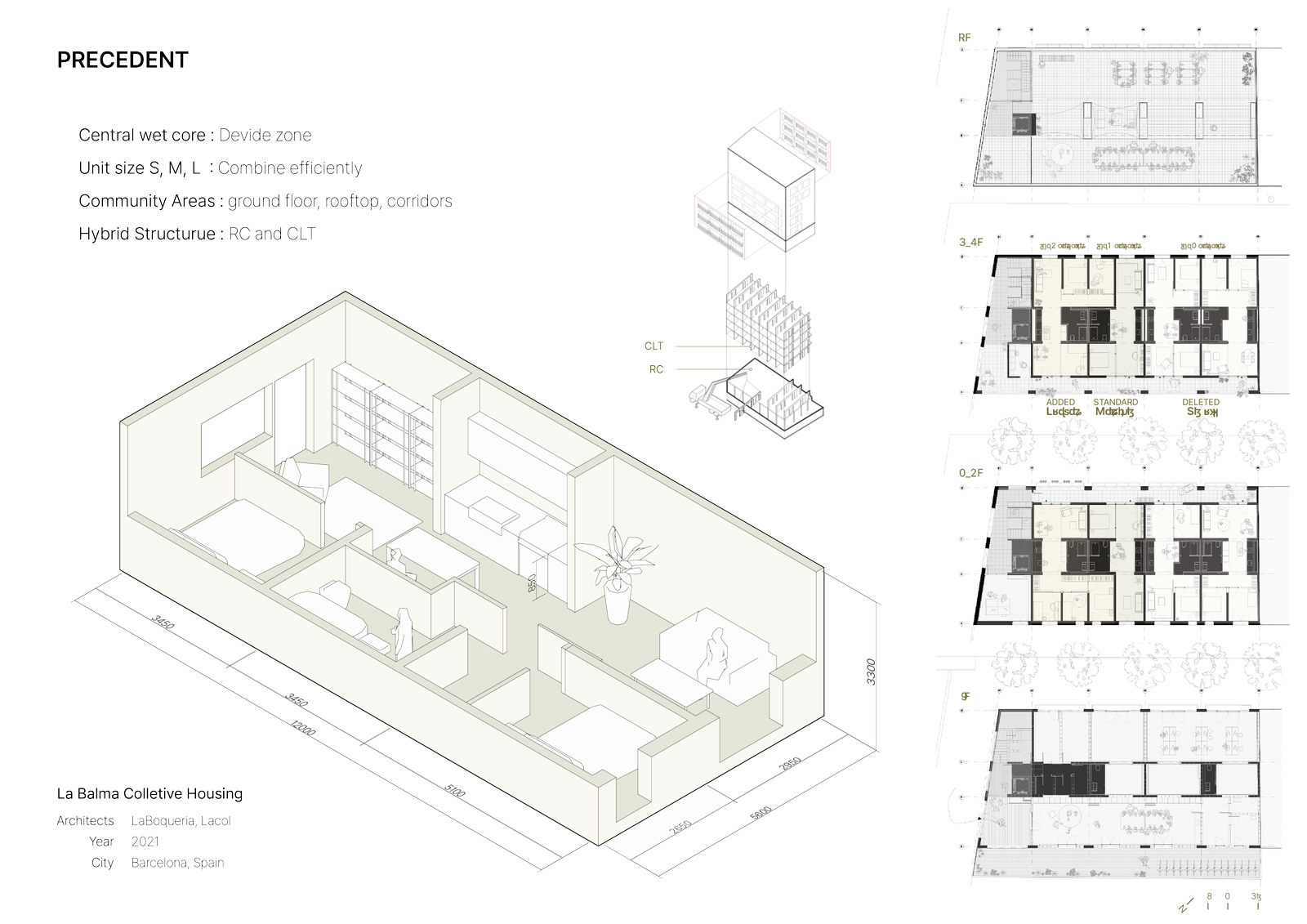
For my design, I studied 'La Balma Co-housing' in Spain.
I learned three key ideas from this project:
First, a central wet core that divides public and private zones.
Second, various unit sizes (S, M, L) that can be combined efficiently.
Third, using shared spaces like corridors and rooftops for the community.
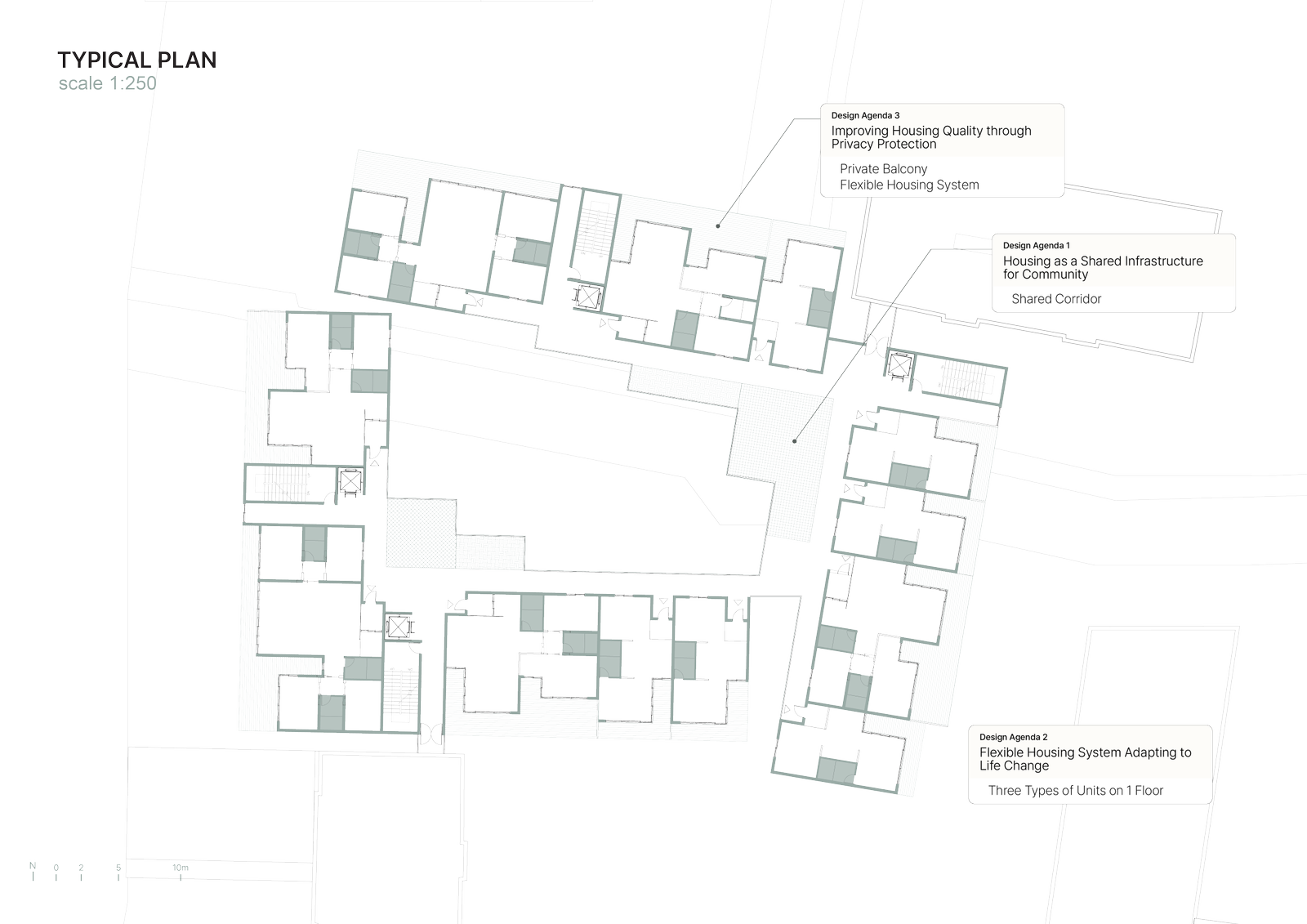
This is the typical plan. You can see the shared corridor for community interaction.
Each floor has three unit types for different lifestyles, and every unit has a private balcony.
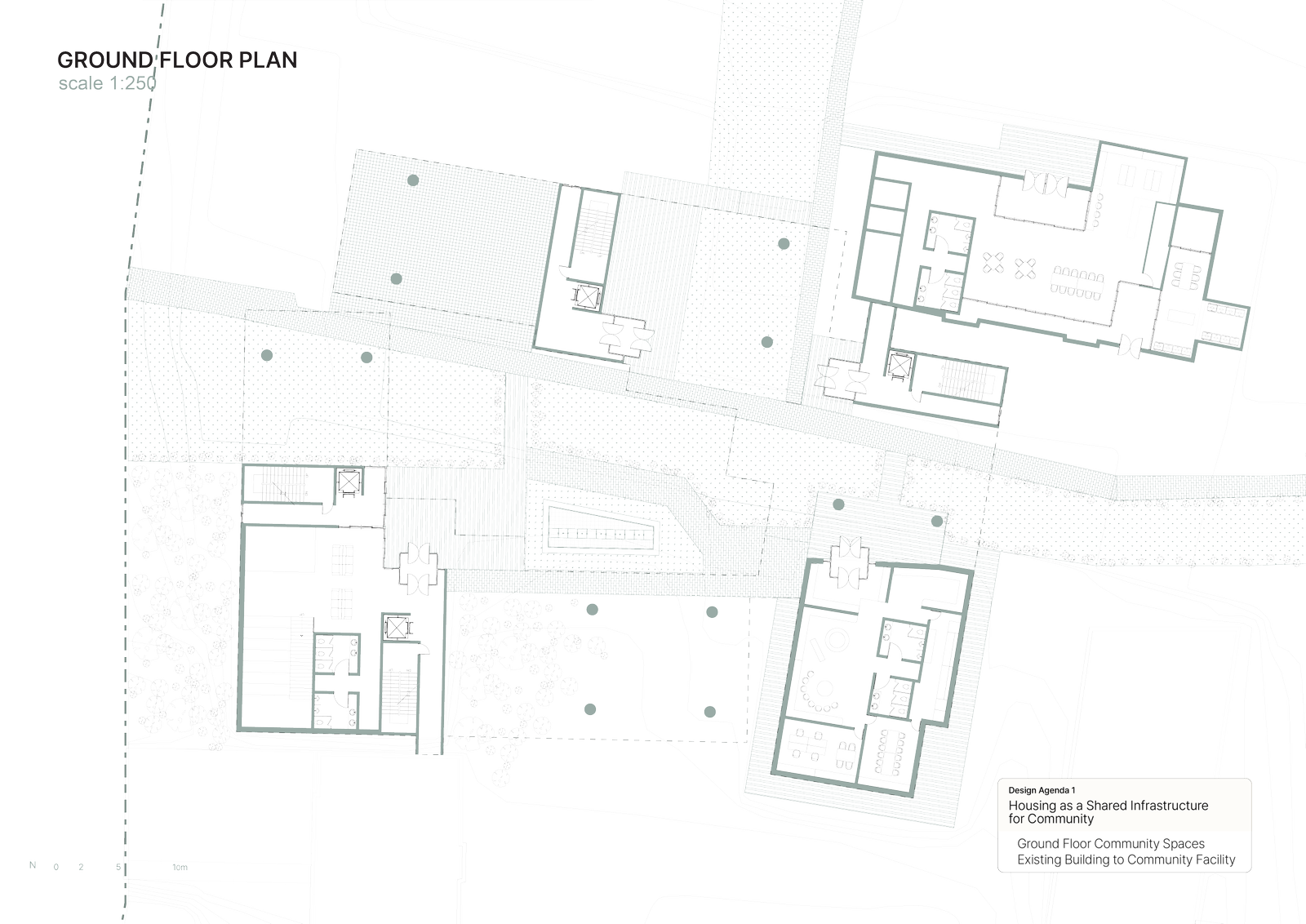
On the ground floor, I placed community spaces that are open to everyone.
The main feature is the central courtyard, which is designed as a dynamic public plaza.
With various green spaces, wood decks, and paved paths, this plaza becomes a hub.
It gathers people coming from the green path, residents, and visitors heading to Baebong Mountain.
In the center, a water feature works as both a fountain and a rainwater harvesting system.
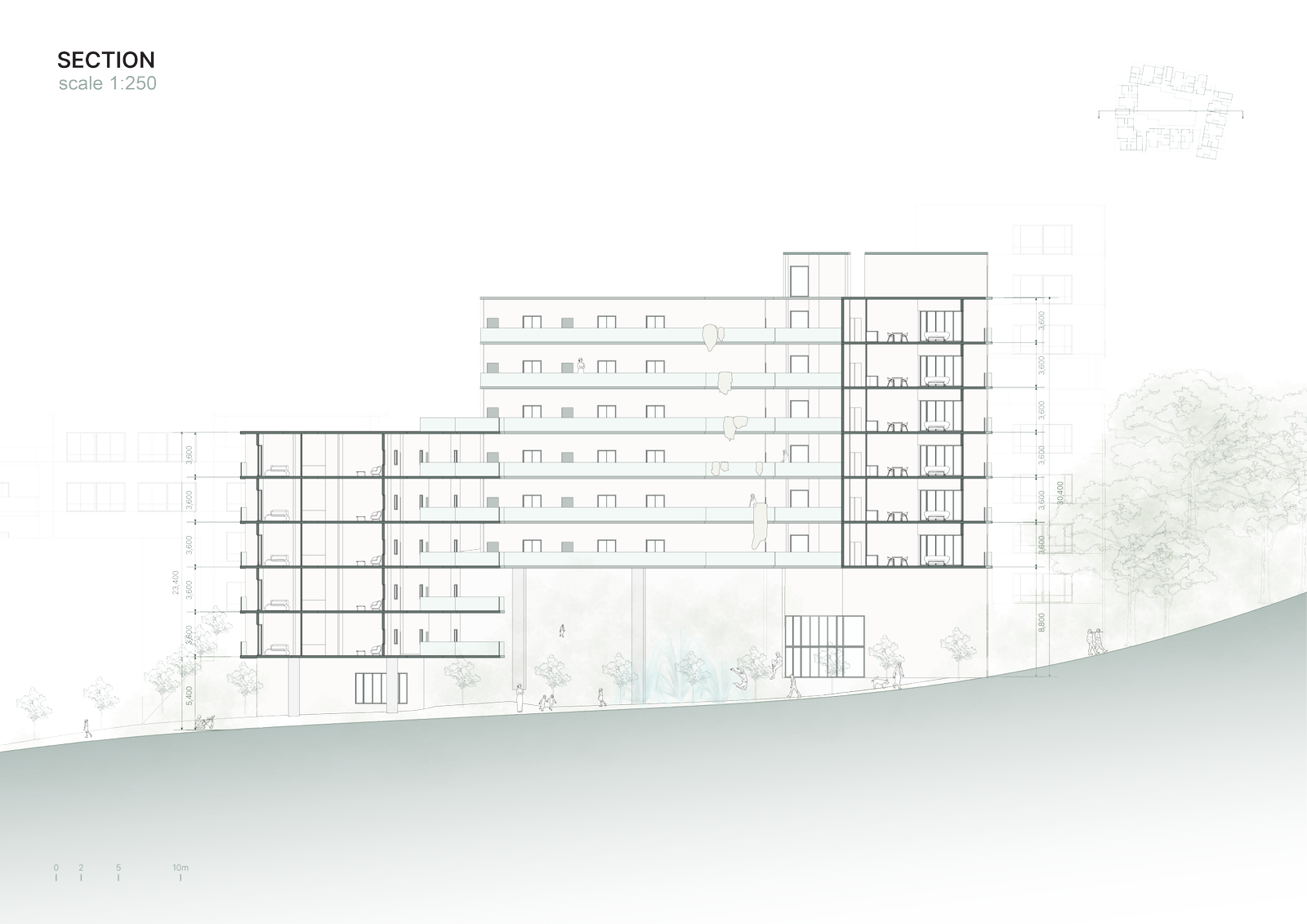
This section shows the relationship with the sloped site and Baebong Mountain. Also you can see how people use the central plaza.
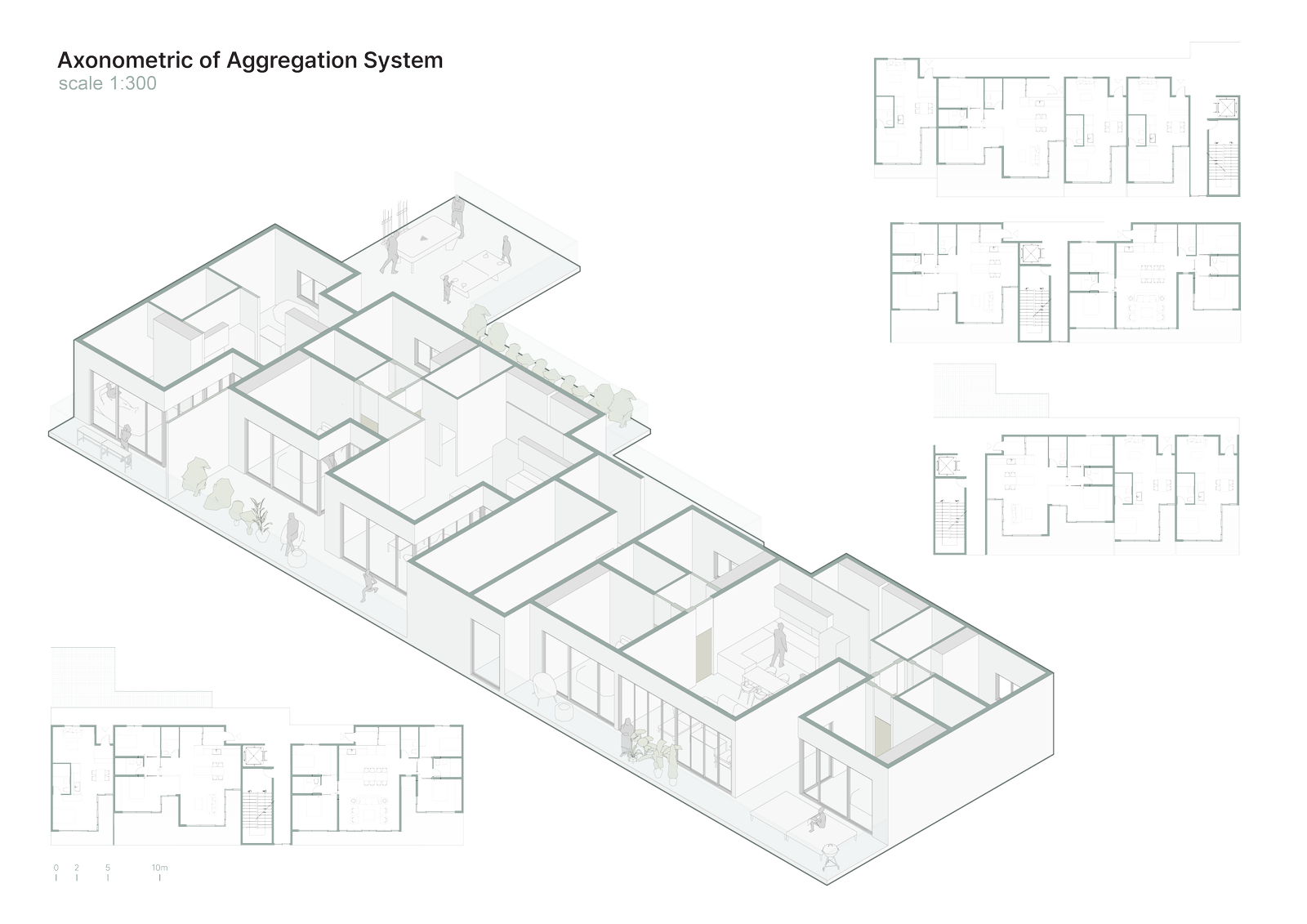
This drawing shows how units are connected. Some buildings have a central core, while others have a core at the edge to create buffer space.
The shared corridor is not just for walking. It's a space where people can meet, play sport, or grow plants together.
In contrast, the private balcony is a personal space for enjoying coffee, exercising, or having a barbecue with family.
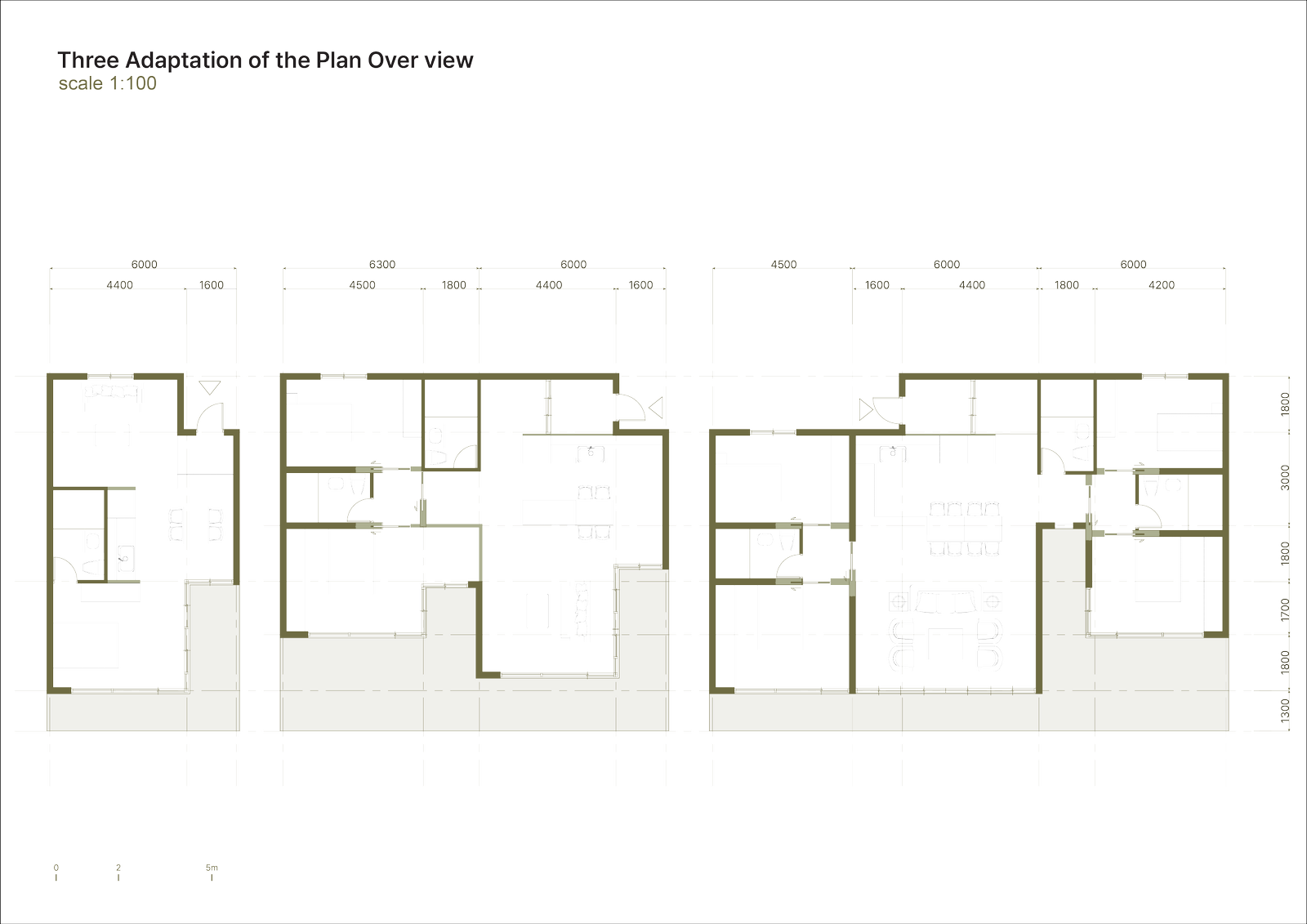
My system has three basic unit types: Small, Medium, and Large.
The small unit has division between the bedroom and living room with a wet core.
The medium unit has bedrooms on one side and a living room on the other.
The large unit is expanded from the medium type, creating private zones on both sides of a central living area.
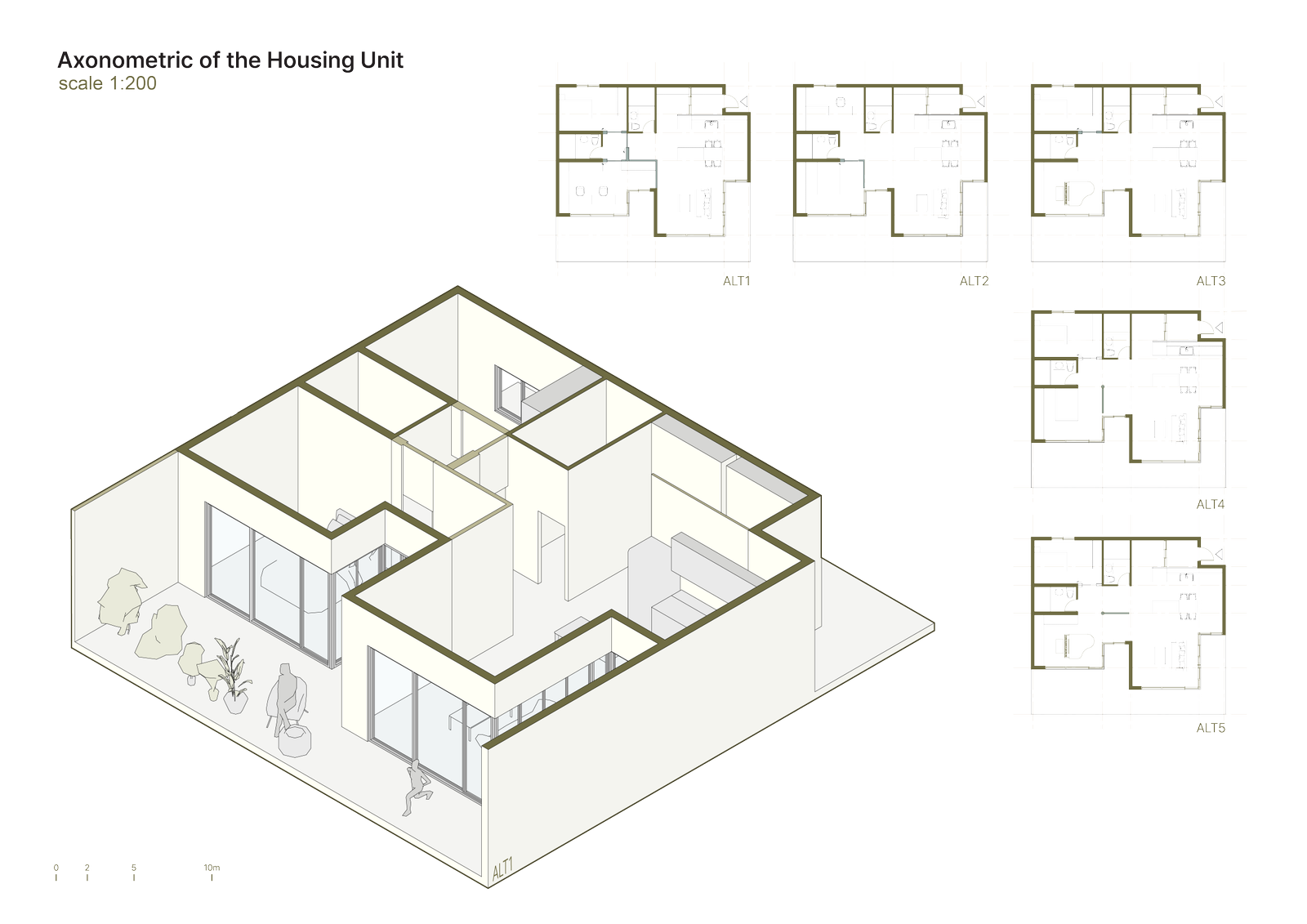
The key feature of my housing unit is its flexibility.
By using partitions, sliding doors, or rotating walls, residents can change the layout.
This allows them to create their own space according to their needs, like making a new room or a larger living area.
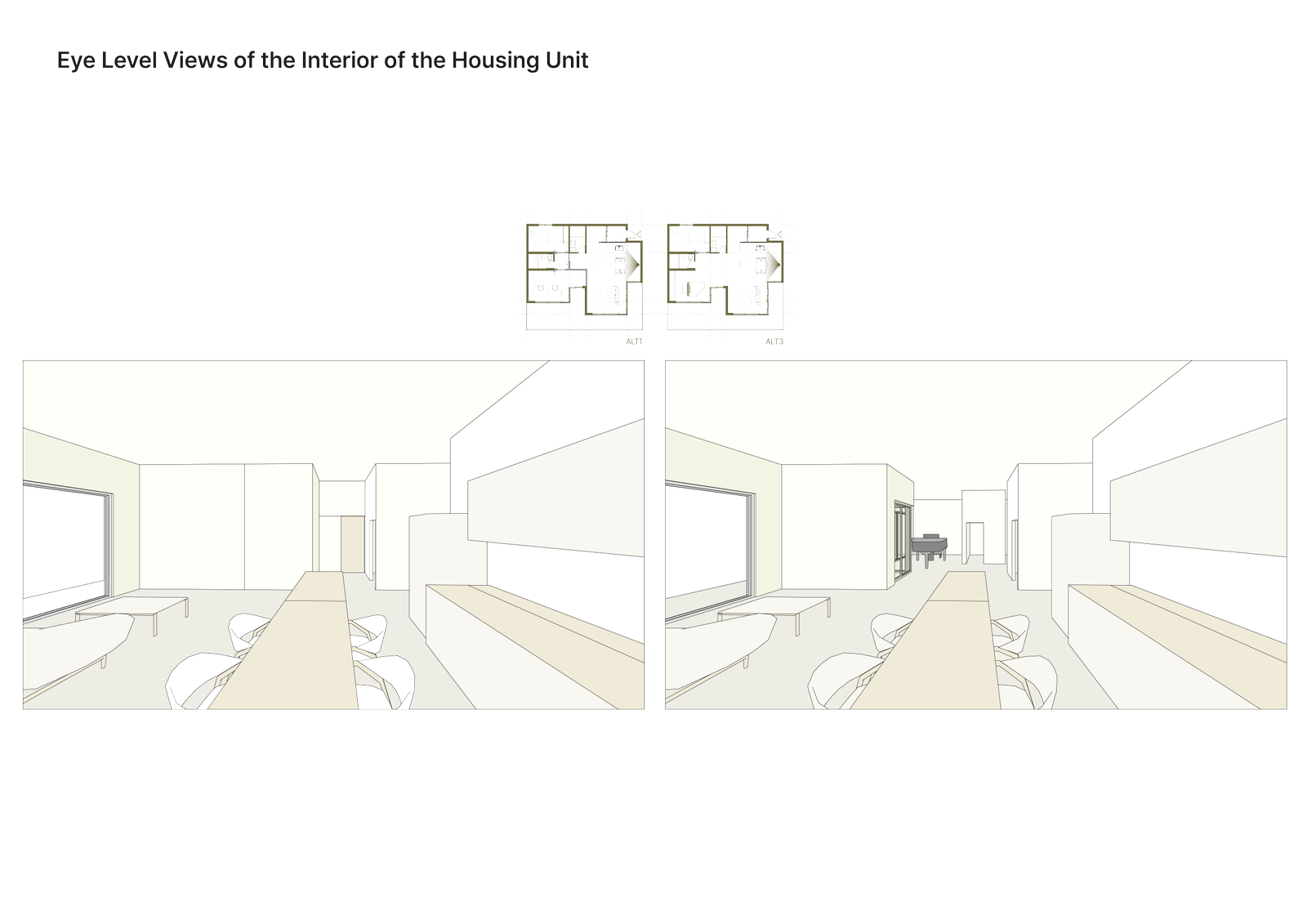
These two images show how different the same space can feel.
The first image (Alt 1) is a more divided plan. This is good for someone who needs an extra private room for work or a hobby.
The second image (Alt 3) is a more open plan. This is perfect for people who want a large, welcoming space for guests or family activities.
This shows how the flexible system can support various lifestyles.

Copyright © uosarch.ac.kr., Some rights reserved.