
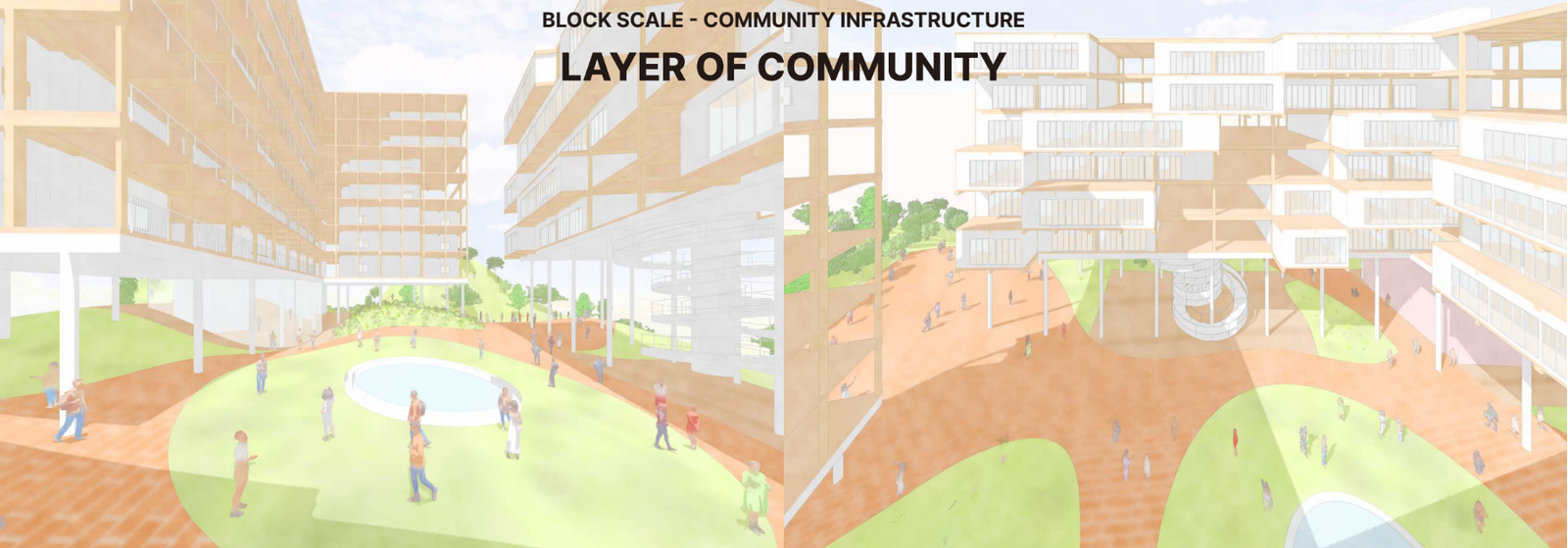
The title of my project is Layer of Community.
This project starts from the idea that housing does not form a single community, but multiple communities layered across different scales.
Description moves through Block Scale, Building Scale, Unit Scale, Building Section, Structure, and Detail, and each scale reflects a different design agenda.
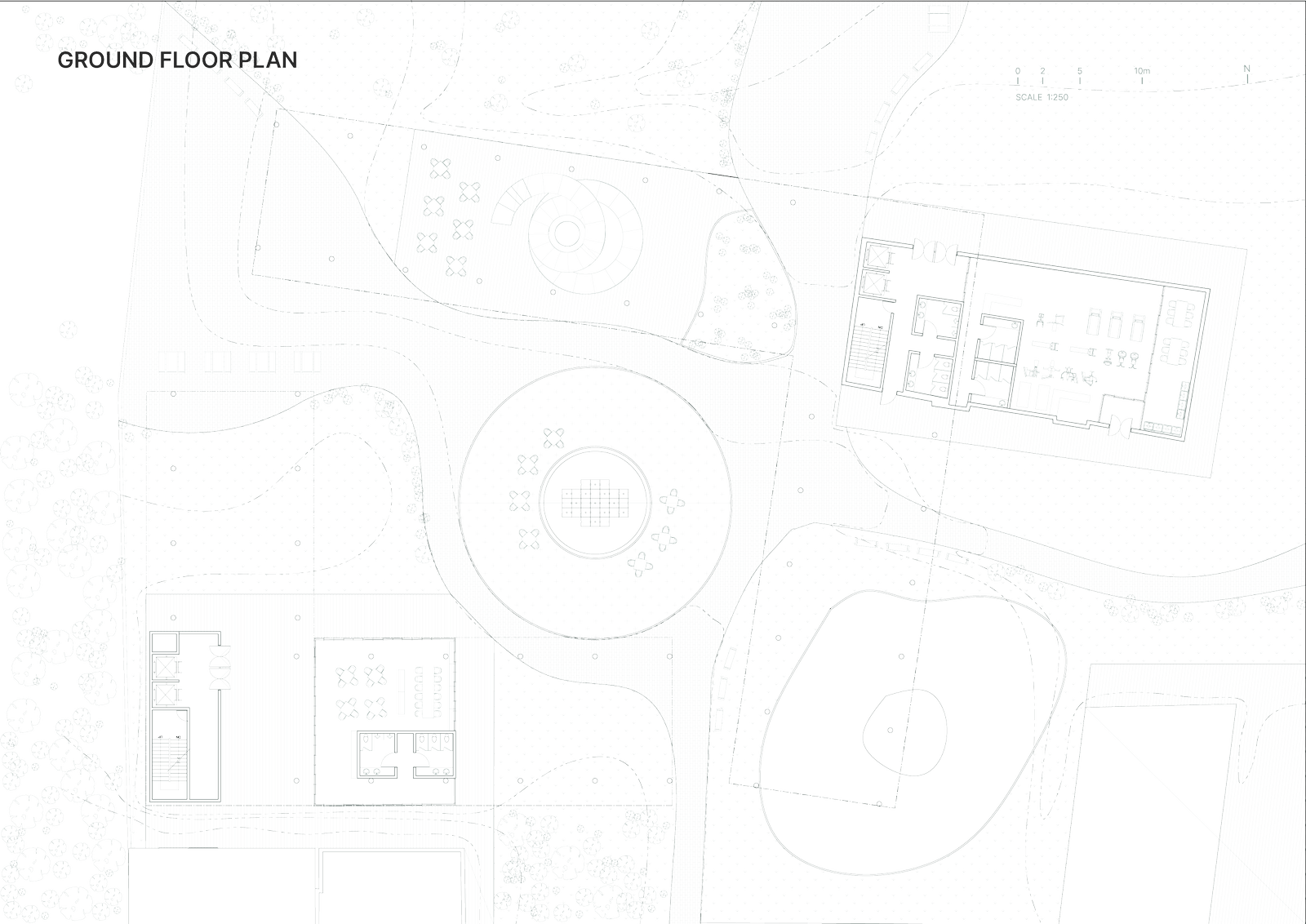
At the block scale, housing is planned as shared infrastructure for the community.
The buildings surround a central courtyard, forming one unified block.
The courtyard works as the social and spatial center of the site.
A fountain at the center also collects rainwater, giving the space both symbolic and environmental meaning.
Residents experience the courtyard as the main place for daily life and community activities.
The courtyard is not only an open space, but a place where people naturally stay and meet.
It visually connects the entire block and strengthens the sense of community.
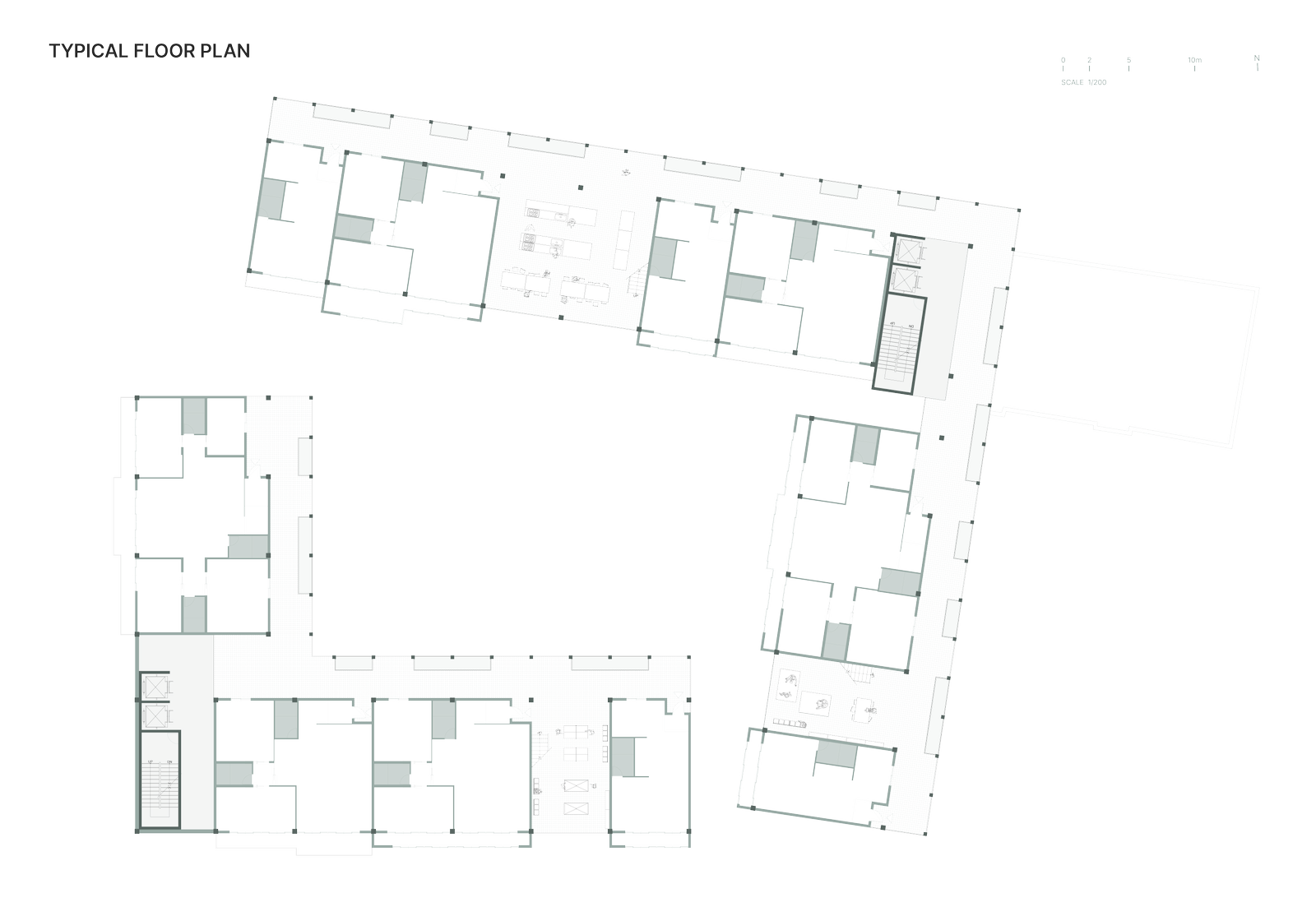
At the building scale, the main agenda is flexibility.
Different unit sizes are mixed on each floor, allowing people with different lifestyles to live together.
Units can expand or shrink over time, responding to changes in life.
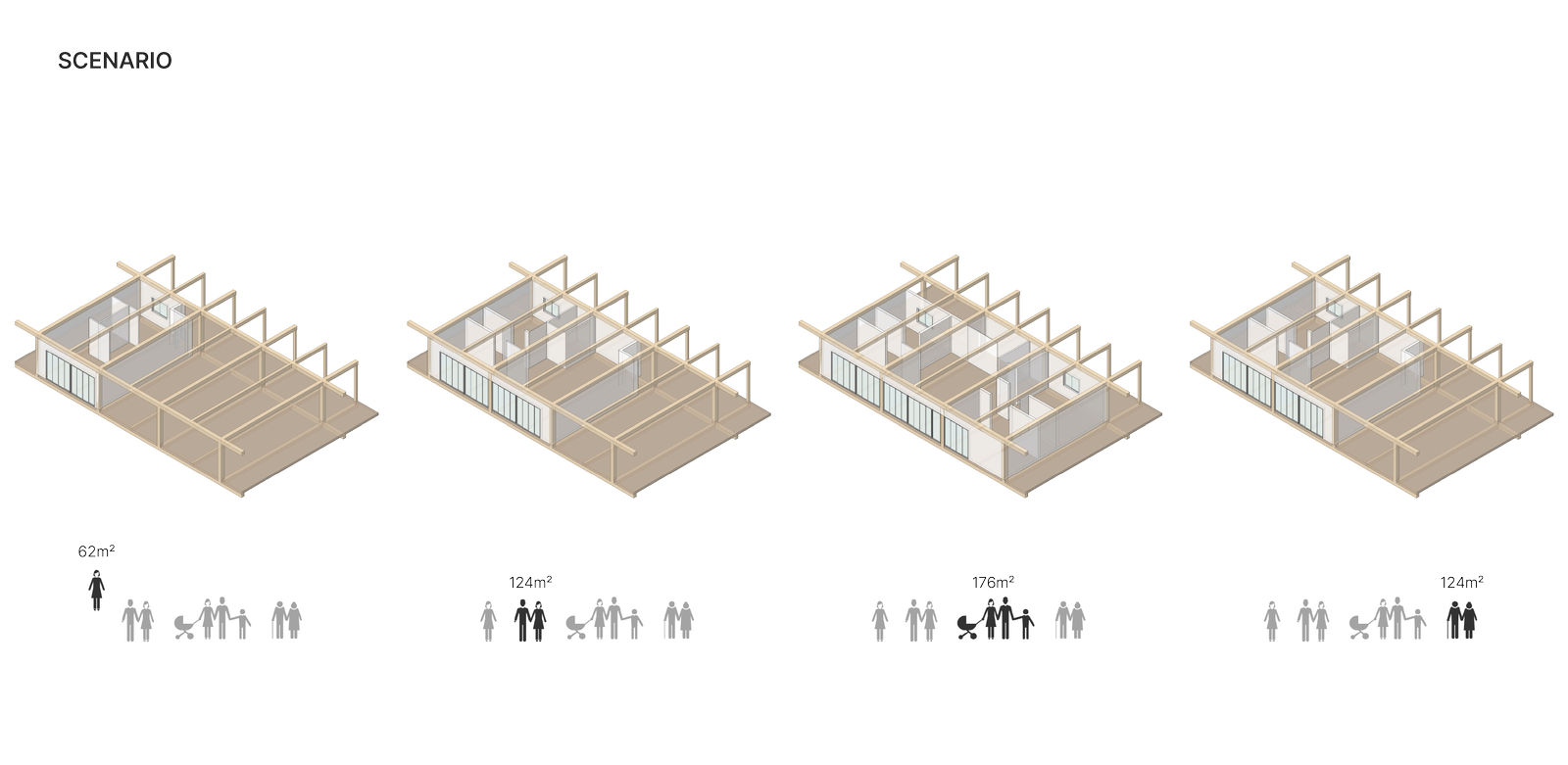
A resident starts living alone in an S unit,
moves to an M unit after marriage,
expands to an L unit when having children,
and later returns to a smaller unit after the children leave.
This system allows different life stages to exist within one building.
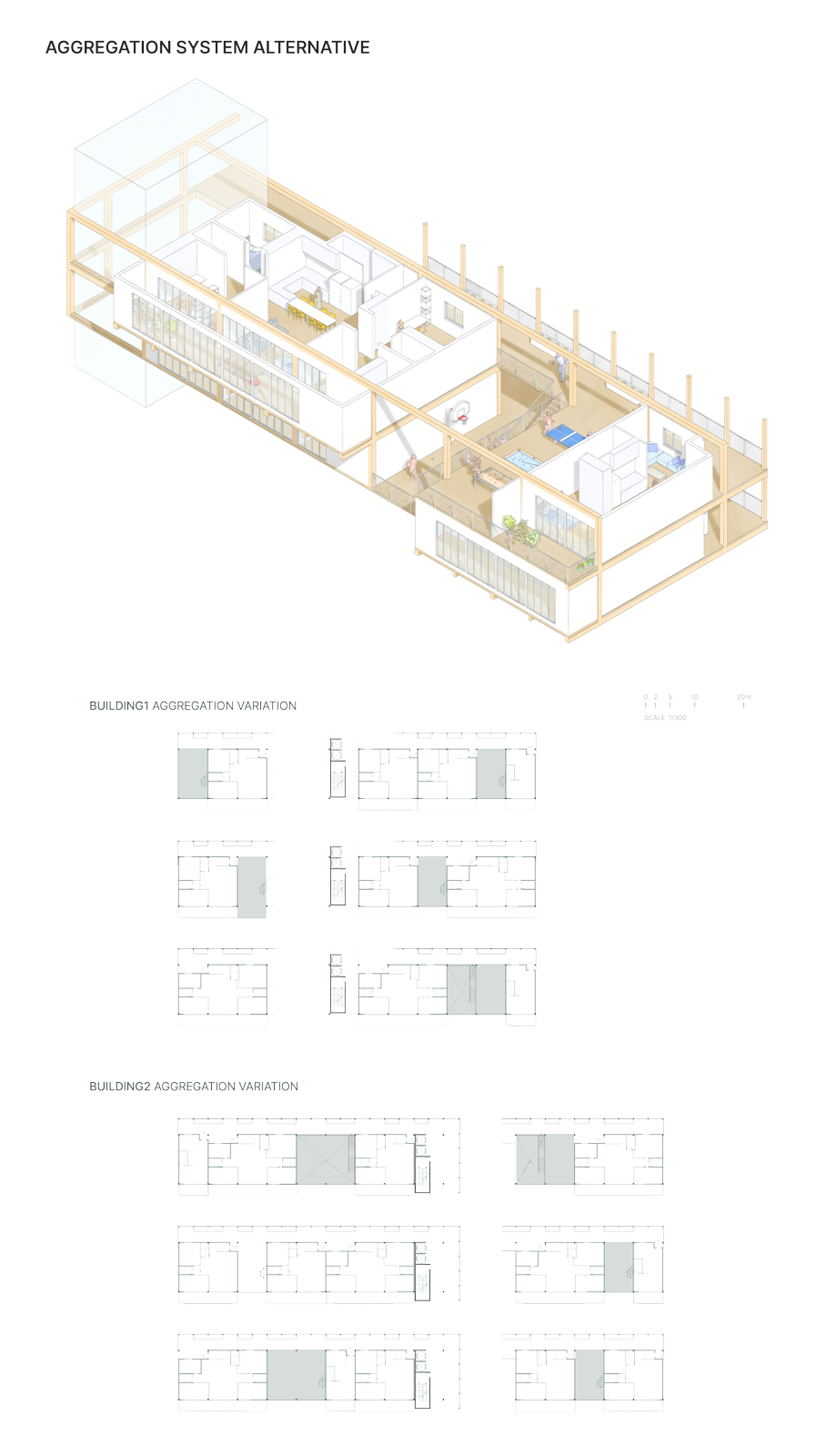
Units are combined in S–M–L sequences.
Some units are directly connected, while others are separated by shared spaces called sky gardens.
These spaces create another level of community.
Vertically paired units take turns having outdoor spaces.
The lower unit has a balcony, and the upper unit has a terrace.
As a result, every unit has access to a private outdoor space, and the building gains a dynamic façade with in-and-out volumes.
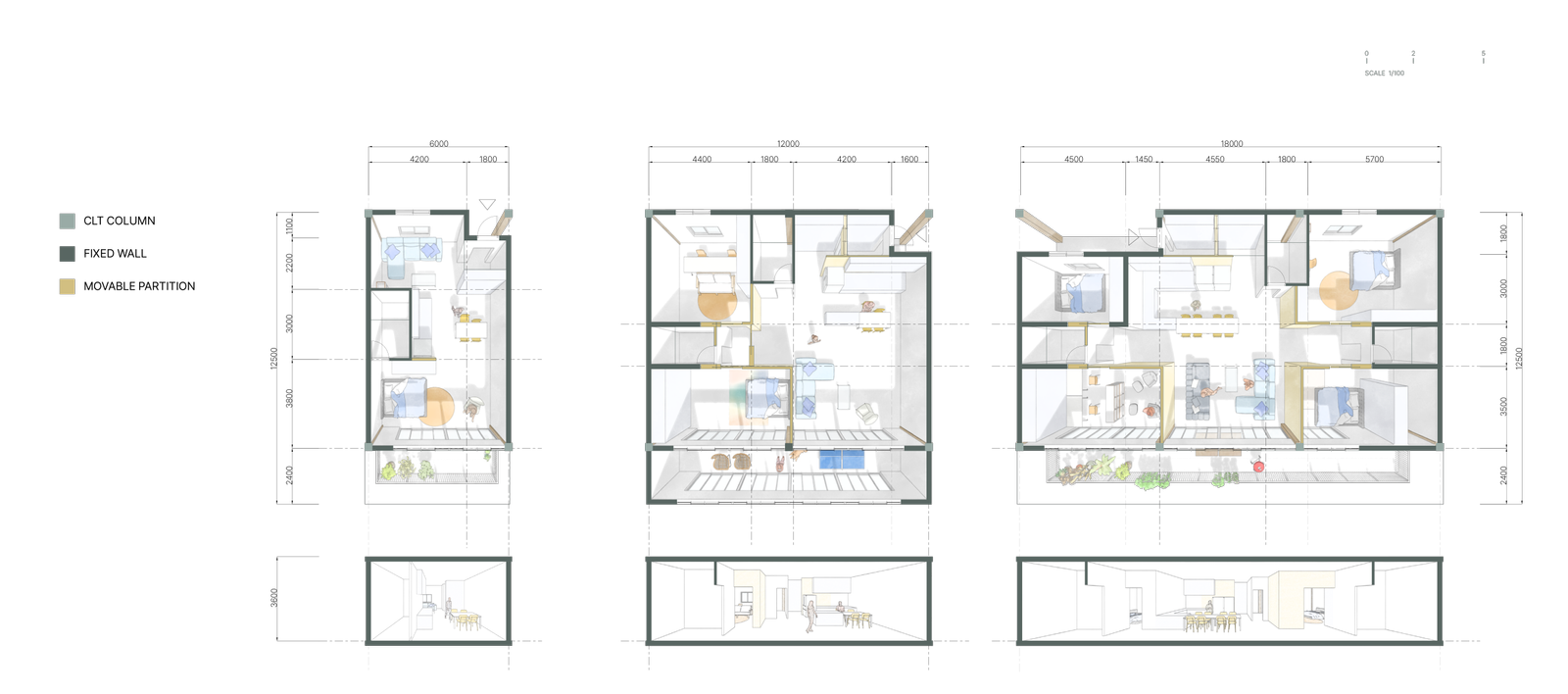
At the unit scale, the focus is on privacy and housing quality.
S units are for 1–2 people, M units for 2–3, and L units for 3–4.
Each unit is organized around a wet core, with different layouts depending on the unit size.
An important point is that all units include an outdoor space—
either a balcony or a terrace—offering different ways to experience the exterior within private living areas.
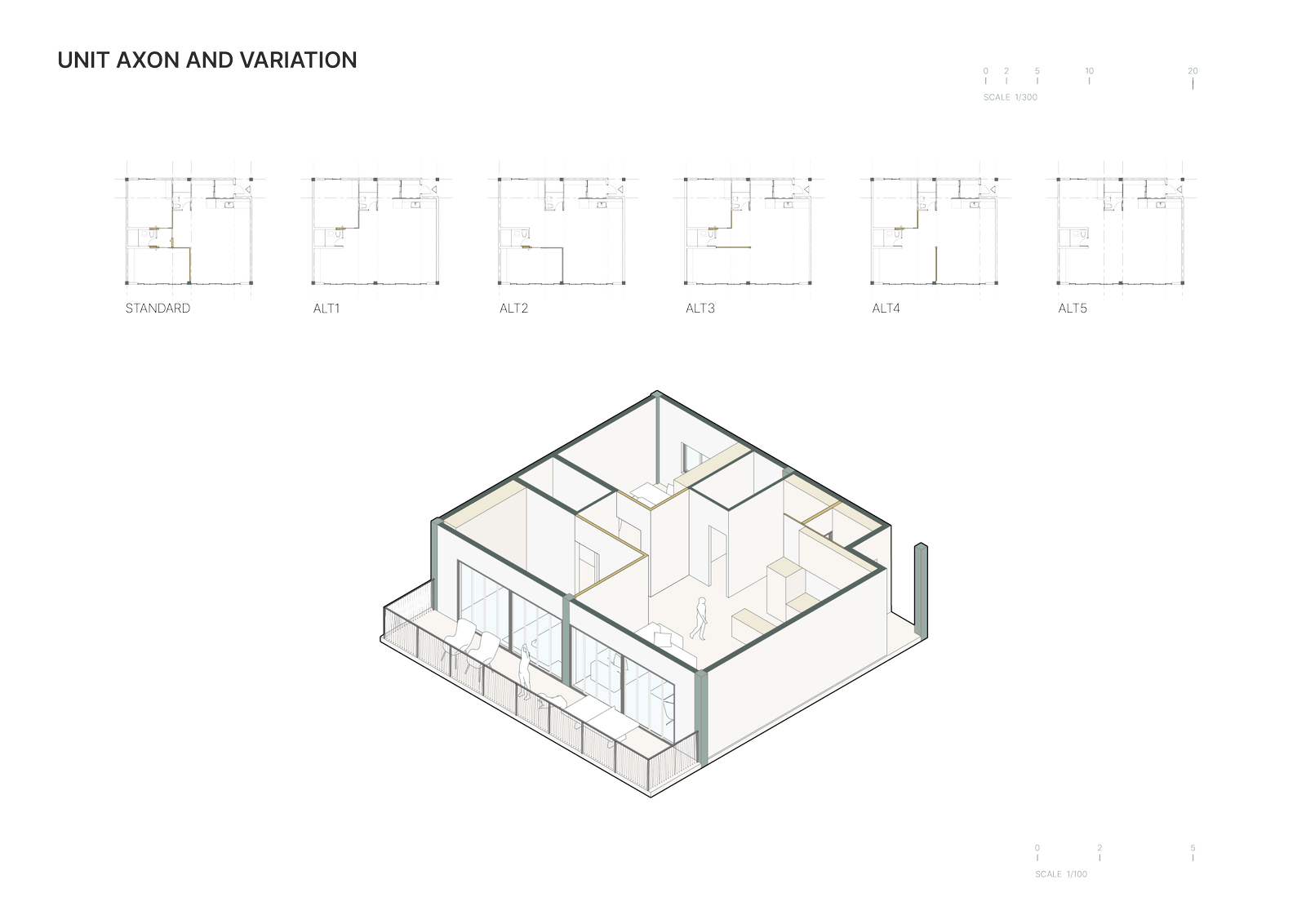
The housing system allows flexible internal layouts.
Movable and rotating partitions make it possible to choose between open spaces and divided rooms.
Residents can adjust the space according to their needs and lifestyle.
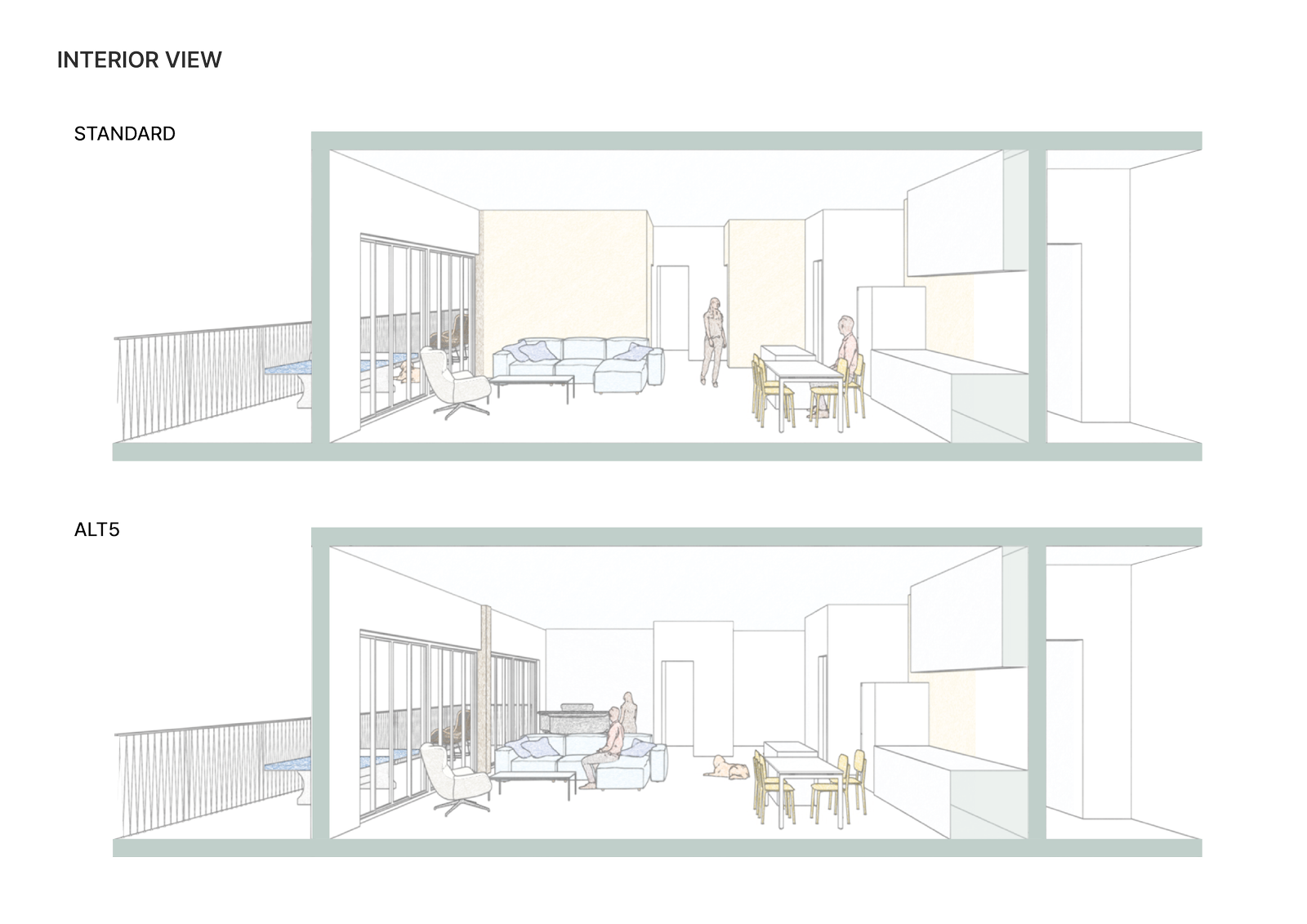
The first image shows a more divided standard layout.
The second image shows the most open layout, with walls minimized.
The wet core at the center helps organize the space even in open configurations.
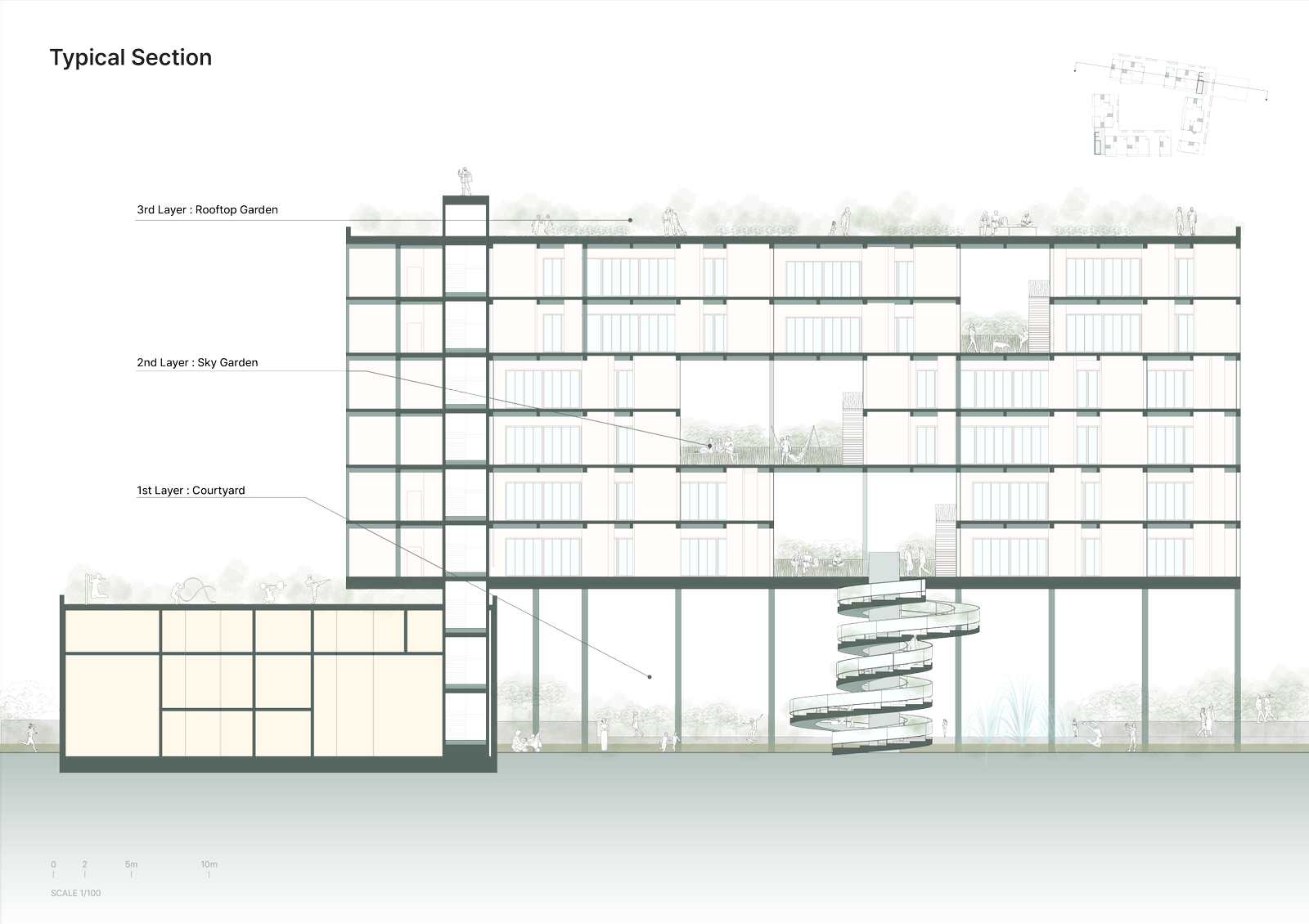
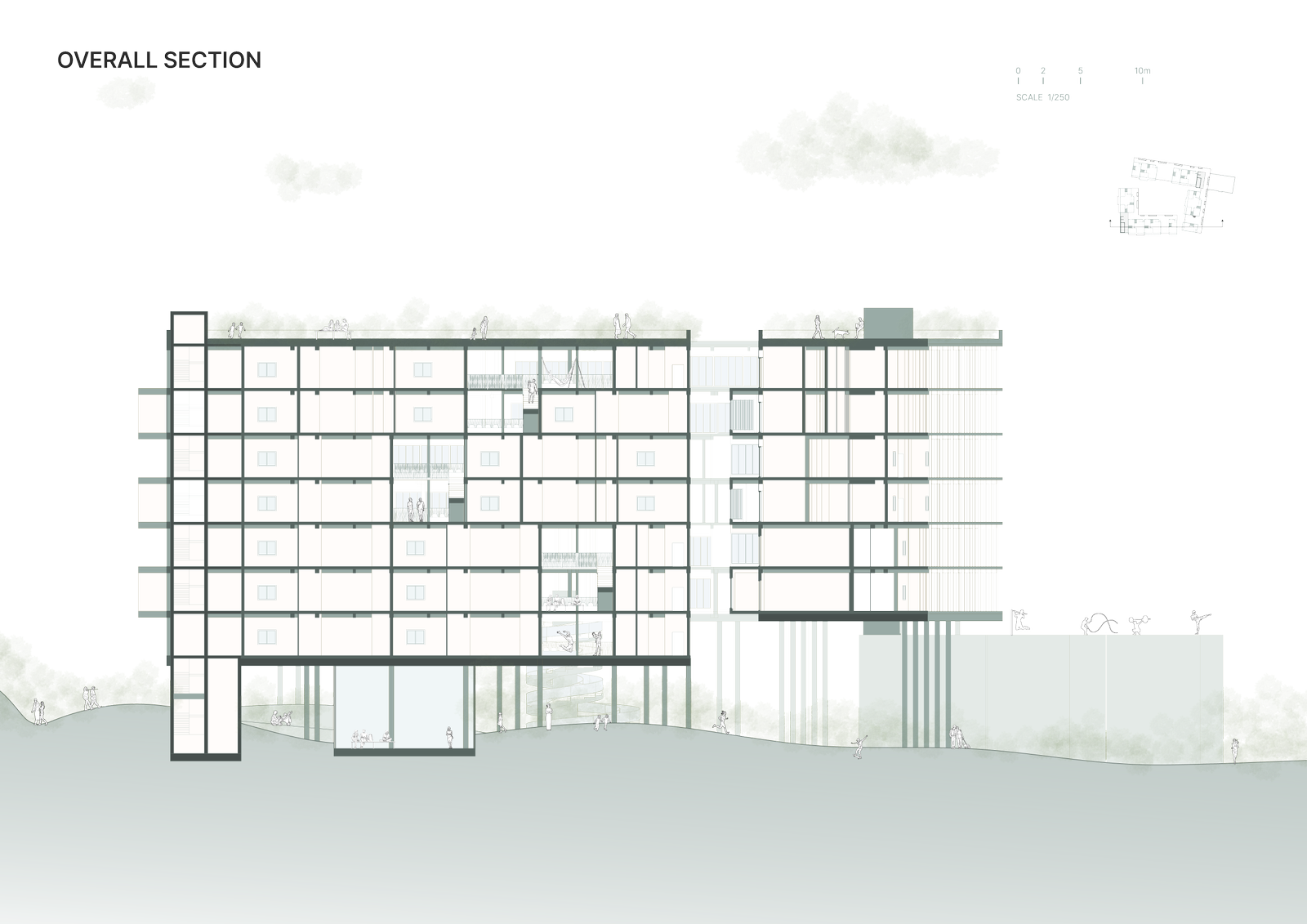
The section shows the idea of Layer of Community across the full building scale.
There are three main community spaces: the courtyard, the sky gardens, and the rooftop garden.
These spaces are connected vertically by stairs, creating layered social spaces.
The existing building on the left contains shared facilities and shares the core with the new building,
improving circulation and securing a larger courtyard.
Structurally, the ground floor uses reinforced concrete columns,
while the residential levels are designed with a post-and-beam system.
This hybrid structure provides a stable base while allowing flexible housing layouts above.
In the detail section, the construction and finish system is explained.
CLT panels are used as interior wall finishes, providing a consistent material atmosphere inside the housing.
On the exterior, HPL panels are applied to ensure durability while maintaining a wood-like appearance.
This detail shows how structure, enclosure, and living space are assembled in a clear and simple way.

Copyright © uosarch.ac.kr., Some rights reserved.