
[Site Analysis_Team Rock]
Location : Huigyeong-dong, Dongdaemun-gu, Residential Redevelopment Promotion Zone (centered around Dongsung Villa), currently housing 537
households
Area : Site Area: 49,397.0 m² (including roads)
On the existing site, the steep slopes and the retaining walls built in response to them were the most immediately noticeable features. The buildings constructed above and the circulation paths used by people had been formed in adaptation to the topography.
Although various open spaces physically exist around the site, they are not connected to it so that residents' leisure activities are largely concentrated in Baebongsan. We identified and mapped the perceived entrances, circulation paths, and barriers, distinguishing areas that function as ‘wasted space’ with no practical use. While these wasted spaces occupy a significant portion of the site, they are neither clearly used by individuals nor functioning as communal spaces for residents. That is the start point of our scenario, 'demolishment of private property', to discuss about the issues generated by this formal parcelization of land.
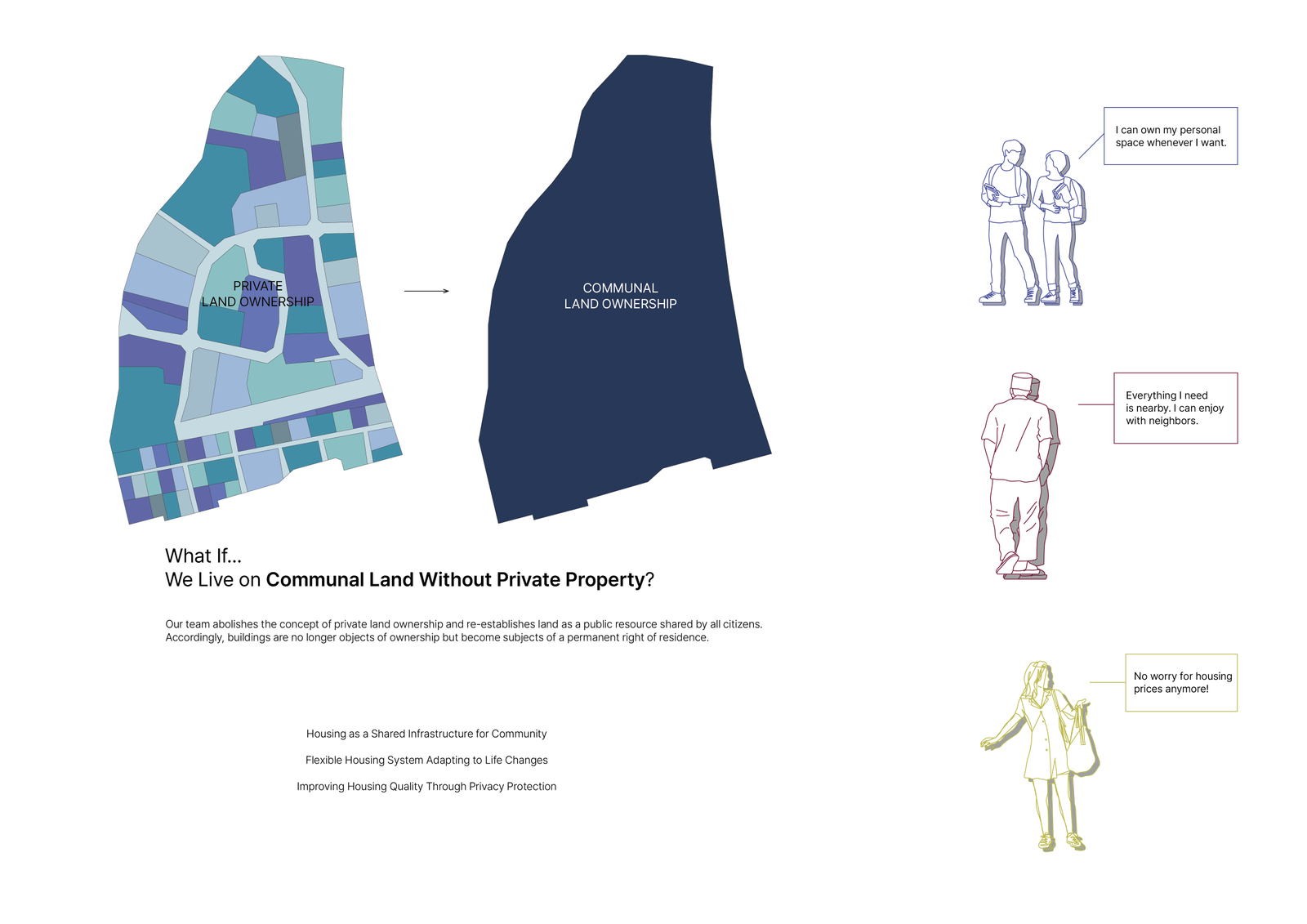
We worked on the scenario that the private ownership of real estate has disappeared and re-established as a public resource. If we manage the land by communal way, we can pursue more ideal way of living, rather than handle them as right of economic value. We came up with these three design agendas to enable permanent residence and ideal community.
1. Housing as a Shared Infrastructure for Community
2. Flexible Housing System Adapting to Life Changes
3. Improving Housing Quality Through Privacy Protection
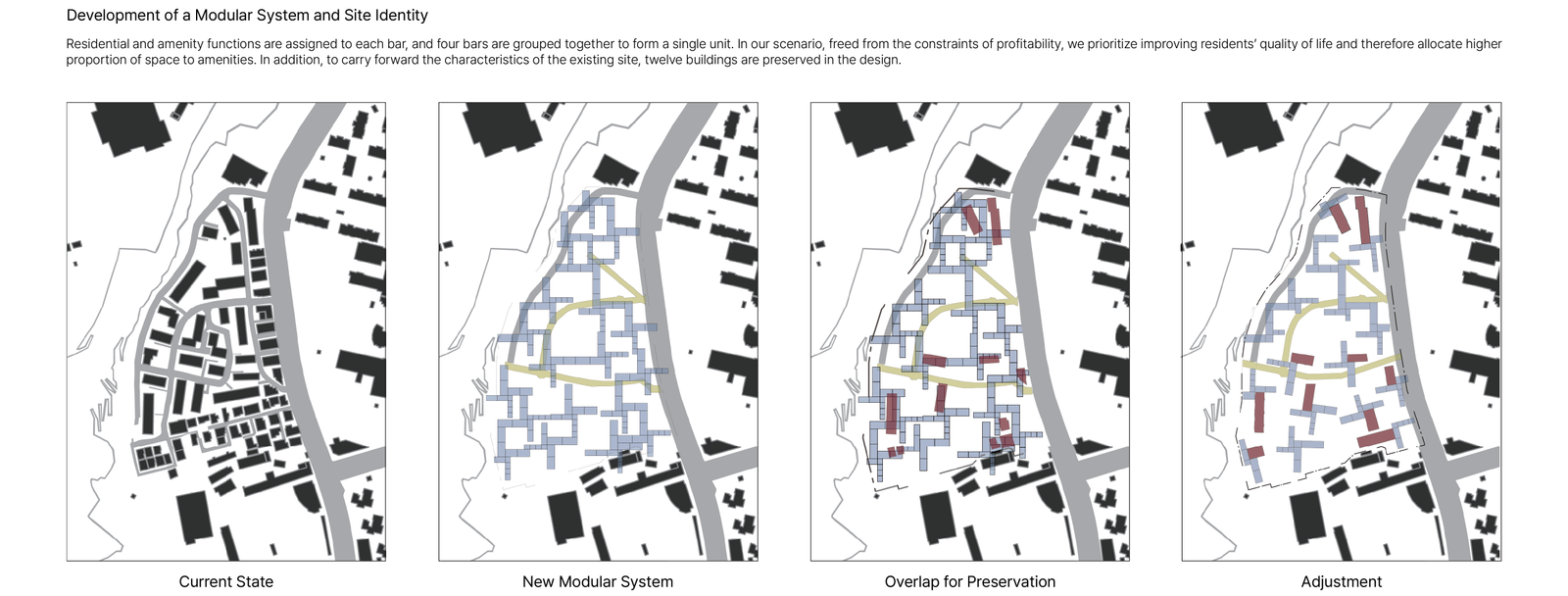
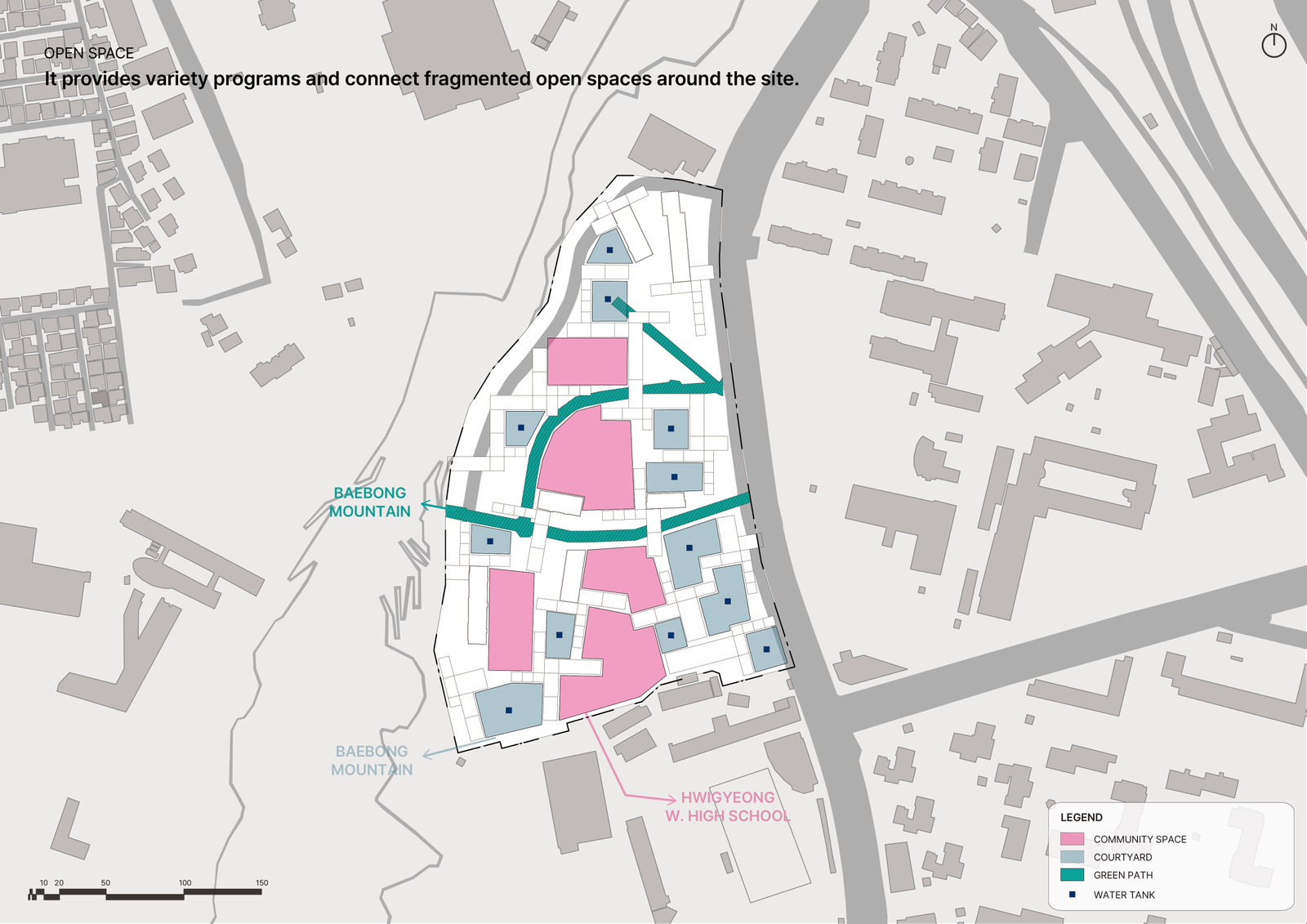
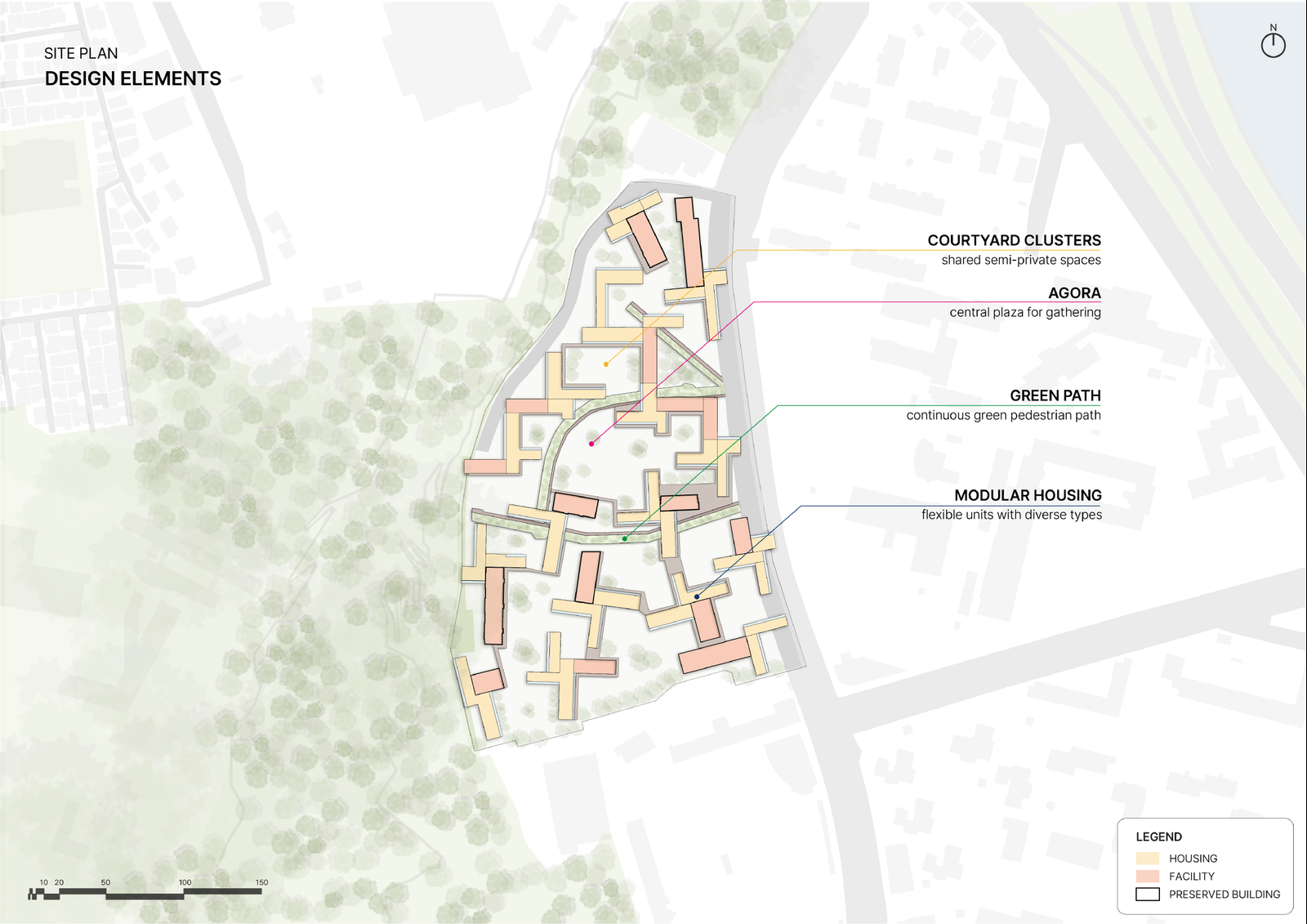
As a design factor, we adopted green path for mega structure that can connect overall site and modular system for even distribution of functions. Main entrances that analyzed through interview and current main road in the site are connected as green path with pedestrian route. The small rectangular spaces formed by the aggregation of units are designated as courtyards, while the larger centrally designed space is named the agora, creating places for interaction among residents at multiple scales within the urban context. These spaces are also connected to the surrounding open spaces of the site, helping to mitigate the site’s existing sense of isolation.
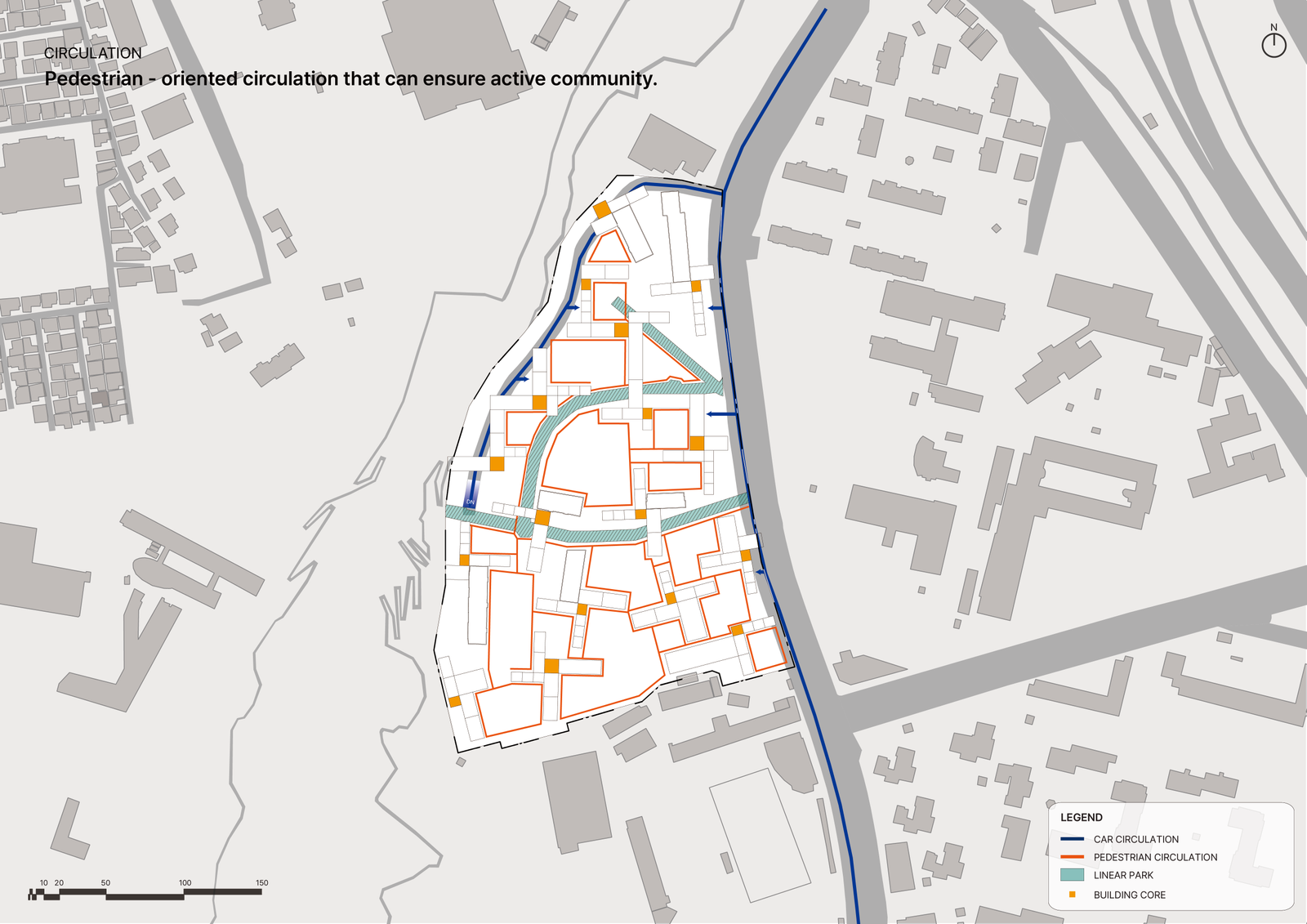
To make the open spaces more actively and safely usable, overall vehicular circulation was positioned along the edges. The western part is designed to go underground, allowing people to reach Baebong mountain directly via the green path.
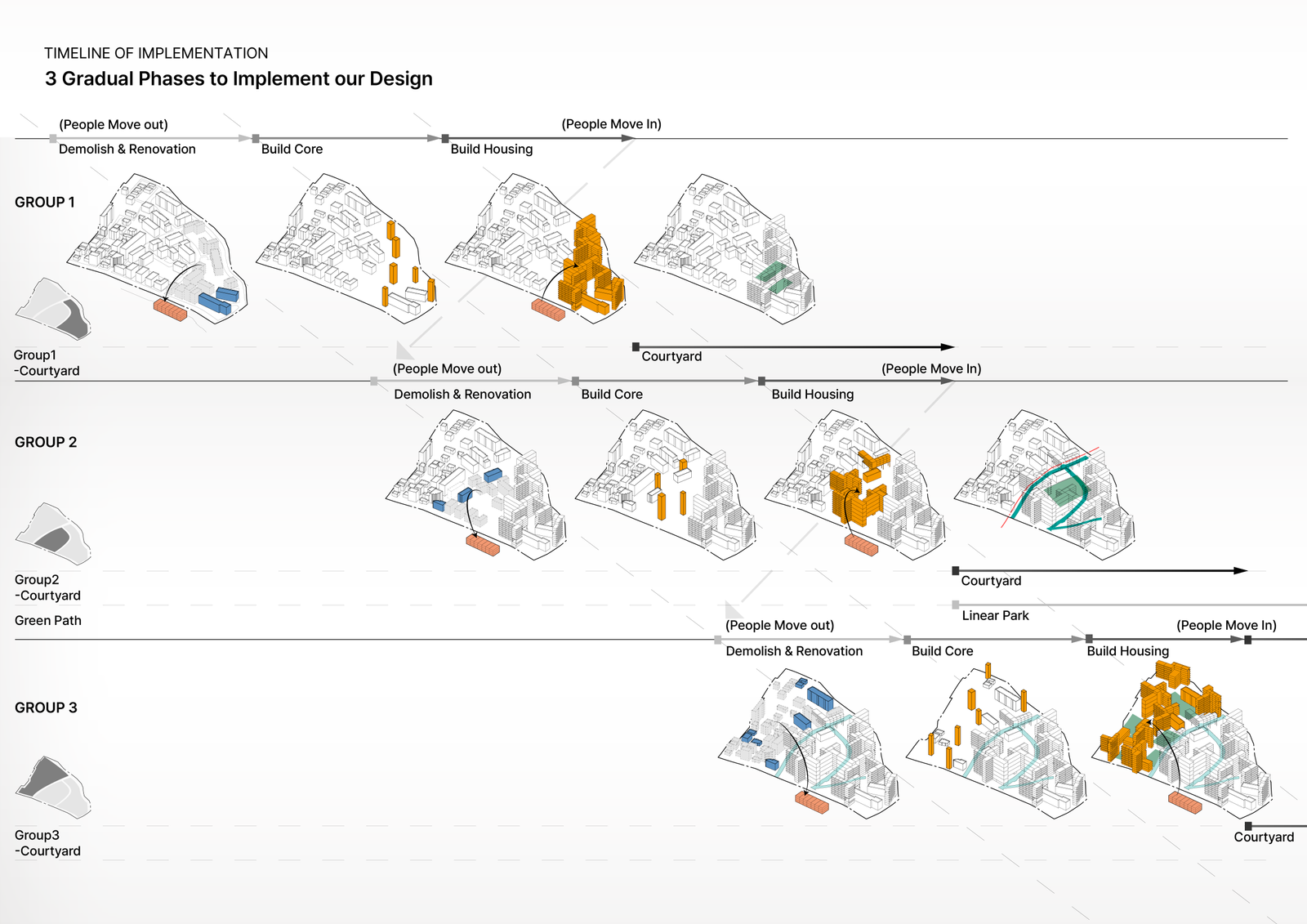
To minimize the inconvenience experienced by existing residents during the redevelopment process, we established phased development strategies. Construction is carried out by dividing the site into three groups based on the green path, while tasks that can proceed concurrently with subsequent phases—such as the creation of courtyards and the green path—are handled separately to improve overall convenience.
[Team Urban Strategy]
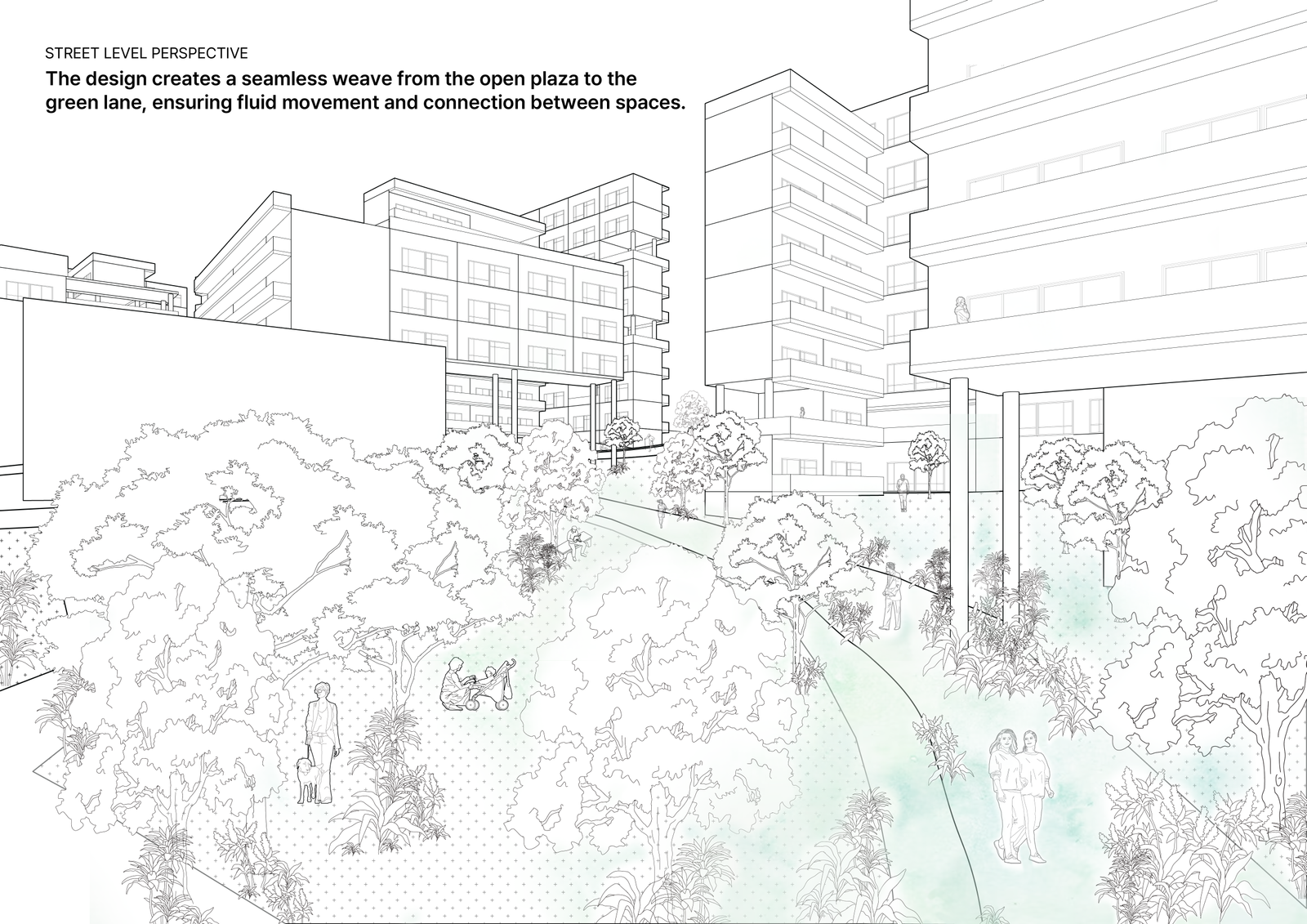
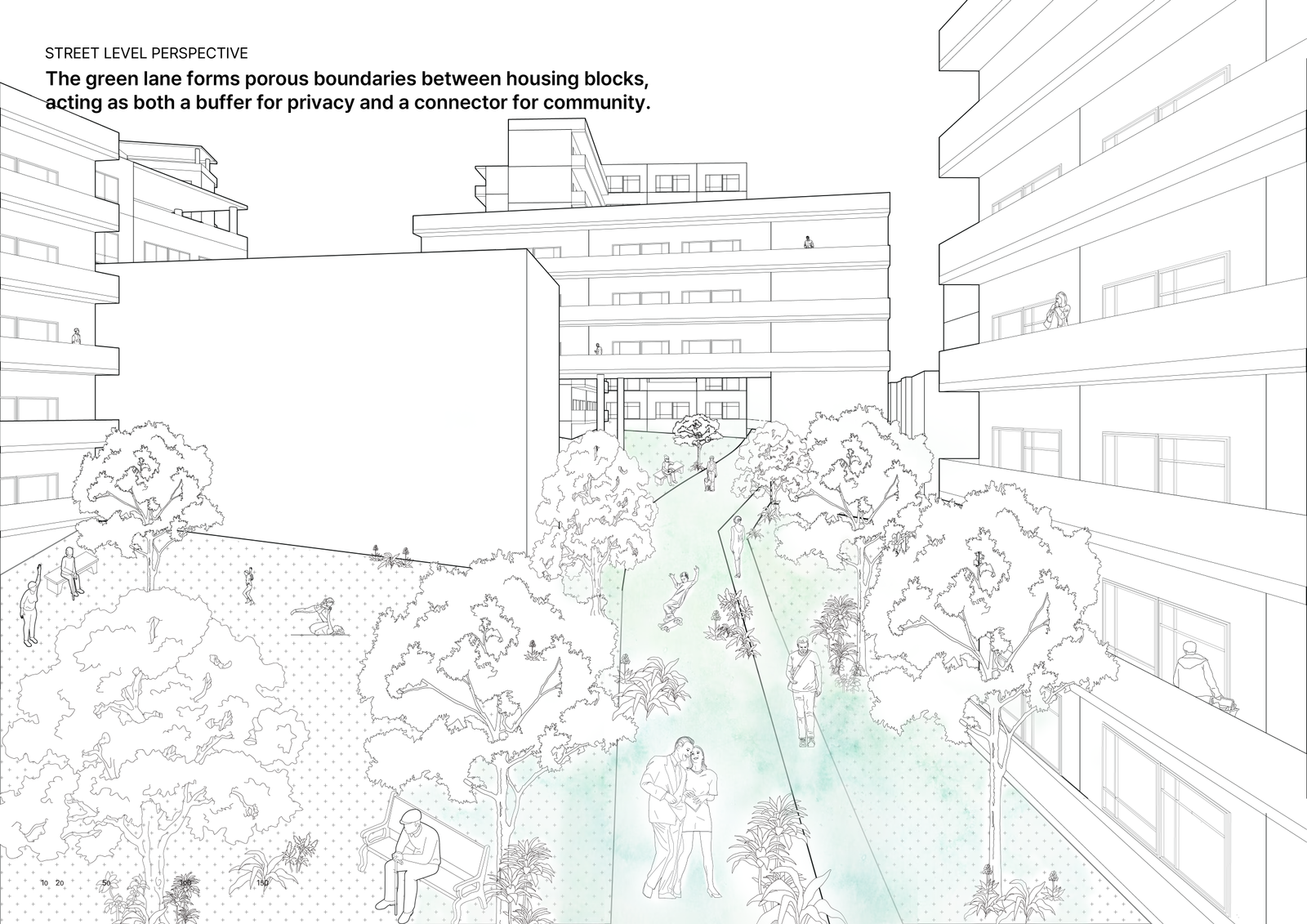
This scene illustrates the seamless connectivity between the green path and the open plaza at eye level. It highlights how pedestrians experience a fluid transition between walkways and open public spaces, enhancing walkability and spatial integration within the site. Also it can show how the green path and open plazas function as soft “barriers” between residential units. It provides a sense of privacy that we pursue through design agenda while maintaining visual openness and accessibility within the landscape.

Copyright © uosarch.ac.kr., Some rights reserved.