
I developed this project under the theme “Cultivated Village with Food and Plants.”
Our team’s masterplan was guided by two key goals—community and living with nature—and this project was shaped by those directions.
Looking at the overall atmosphere of the village, you can see outdoor spaces where water and greenery blend together, and ivy cascading down the façades, bringing nature closer to the residents.
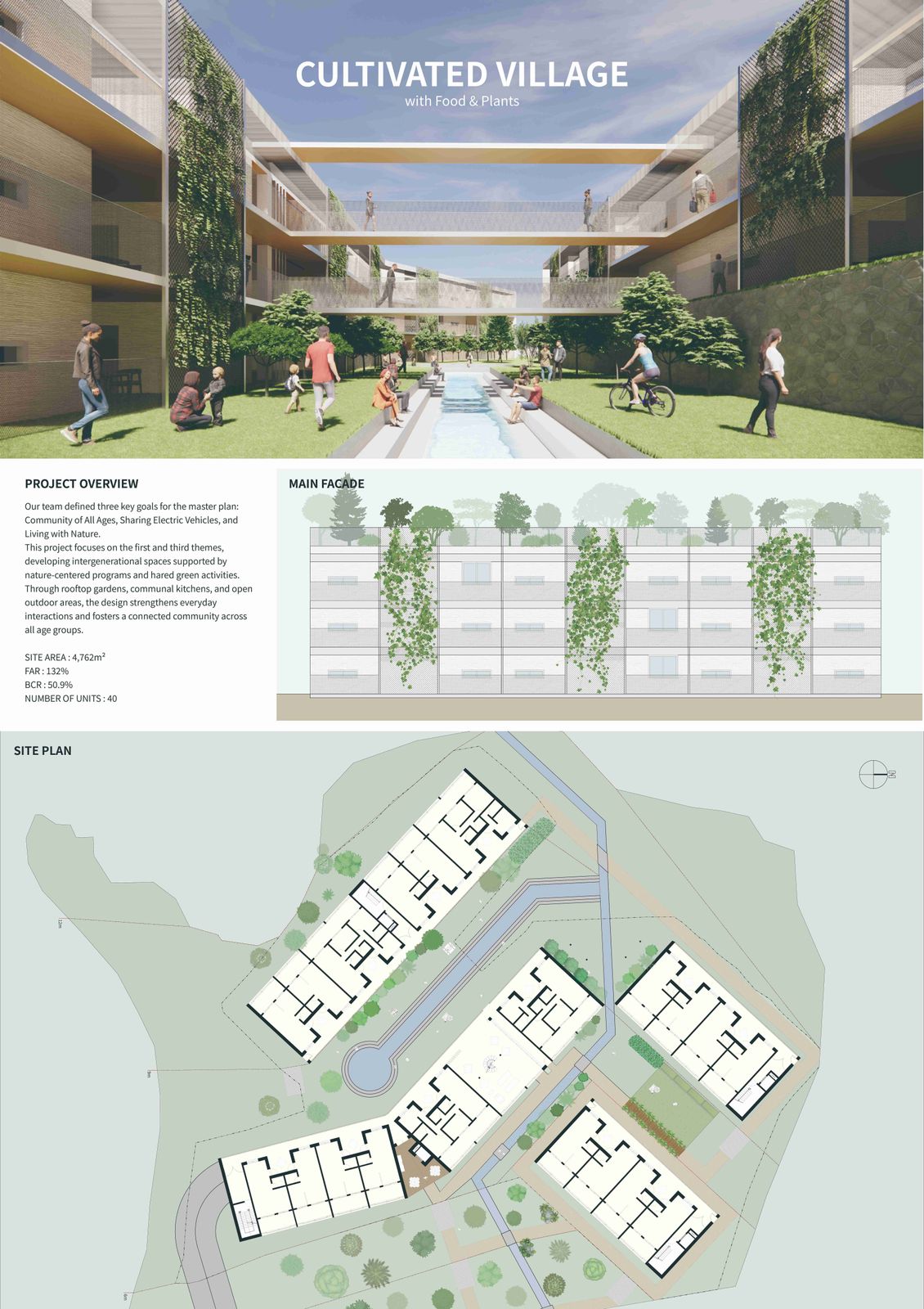
The core idea of this project is to spatially express how food and plants bring people together.
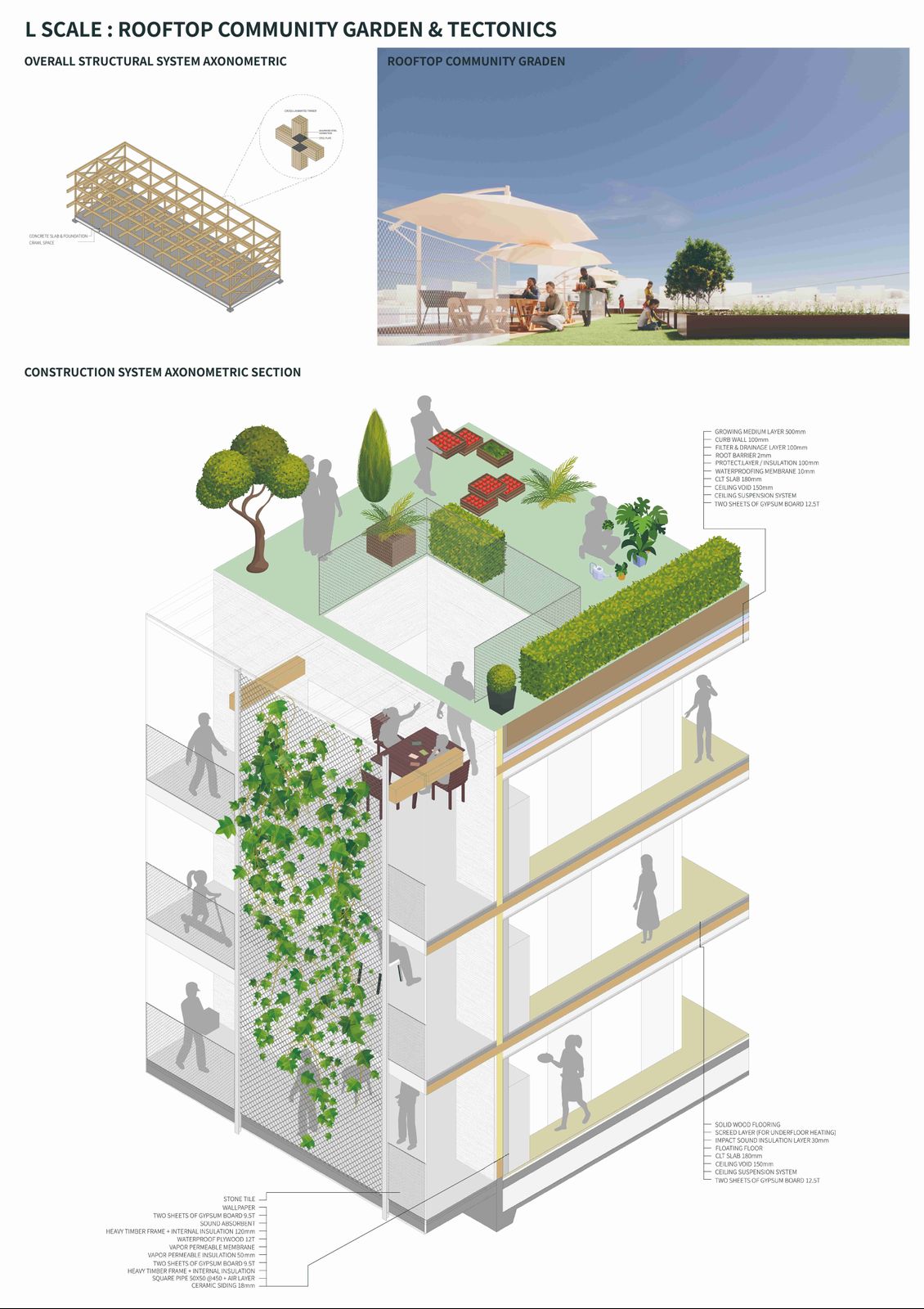
And the starting point of that idea is the rooftop.
The rooftop garden is not just a landscaped space; it is a productive area where residents cultivate their own vegetables and share their harvest.
As you can see here, the rooftop includes barbecue tables under parasols, where residents can enjoy the crops they’ve grown, as well as an urban farm area where they can grow various vegetables, flowers, and herbs.
The building is constructed with CLT panels and a concrete slab.
By using CLT, we were able to secure long spans with a lighter structural weight, allowing us to create a wide, open rooftop garden like this.
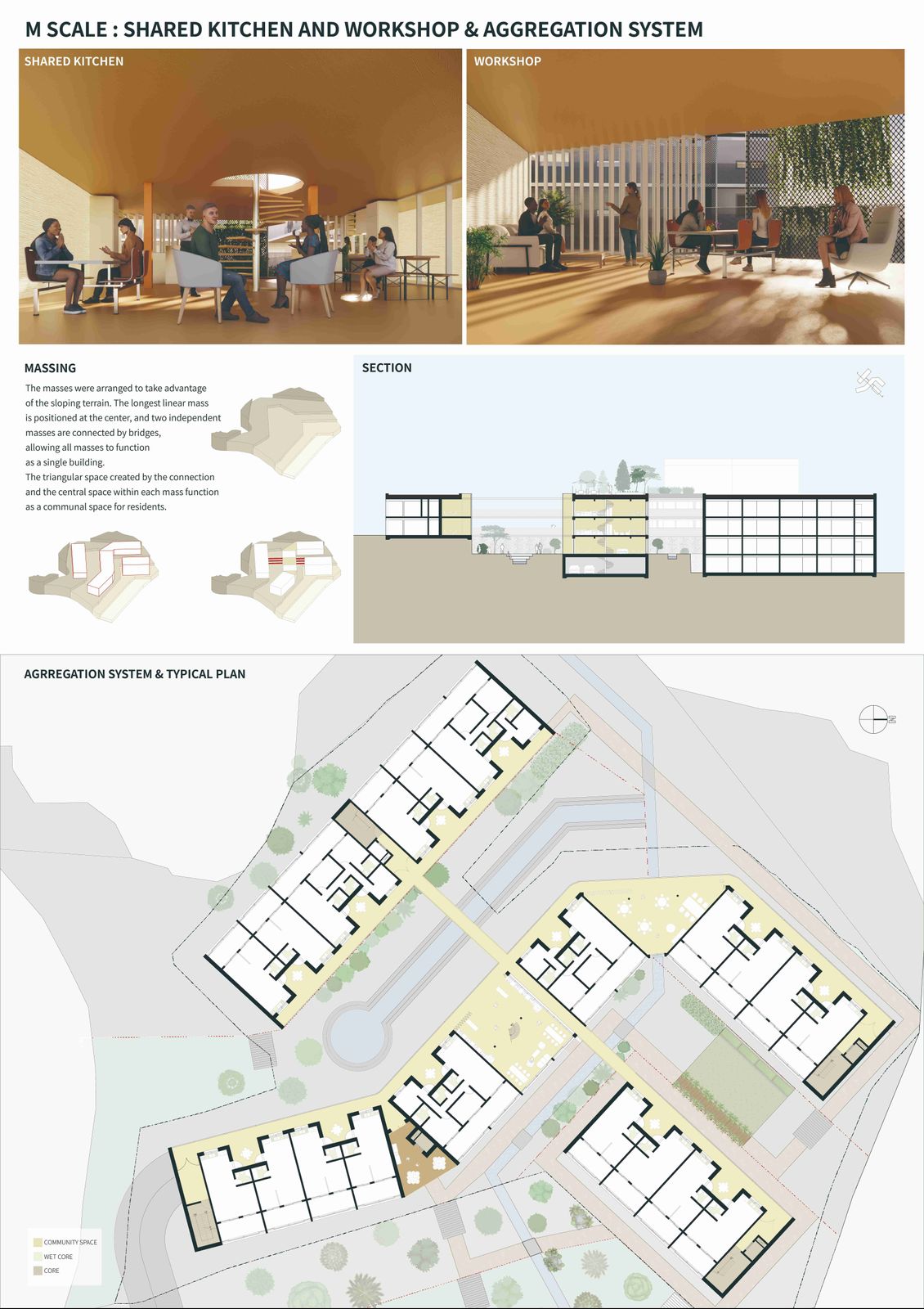
The crops grown on the rooftop naturally flow into the shared kitchen and workshop located in the central building.
These spaces serve as community hubs where residents cook together, learn from one another, and build relationships through food.
In the shared kitchen, residents don’t just prepare meals;
they cook with ingredients harvested from the rooftop garden, creating everyday opportunities for casual interaction.
In the workshop, meetings and group activities take place, and residents with an interest in gardening can share their knowledge and hobbies with others.
As shown in the aggregation system below, these shared programs are arranged in the gaps between the three separated masses, naturally forming communal spaces between the housing units.
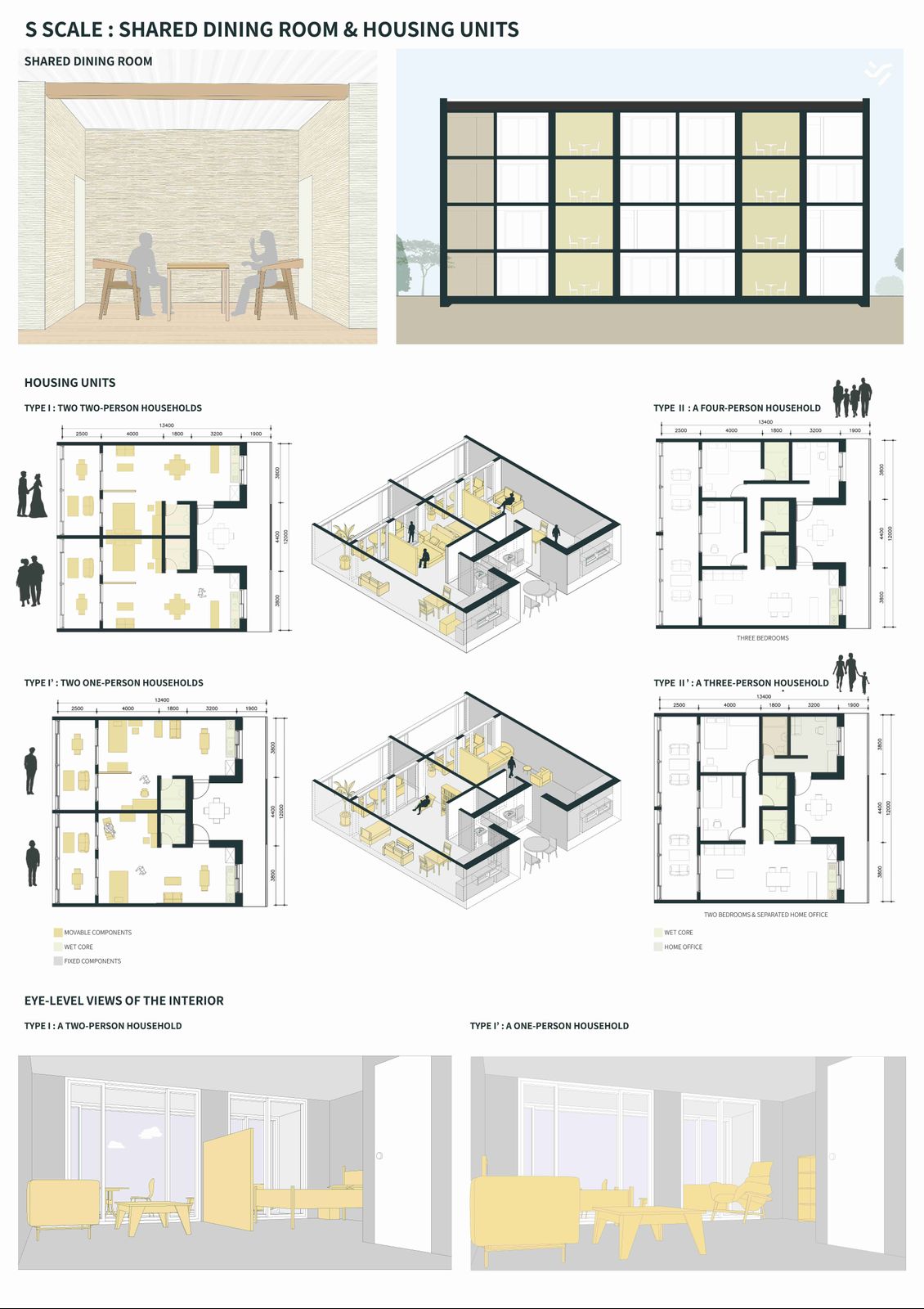
As shown in the section on the right, these shared spaces extend even further, forming small dining areas between residential units, creating moments of everyday communication.
The housing units are primarily based on two adjacent two-person households,
but by adjusting furniture or partitions while keeping the fixed walls, they can be transformed into one-person units.
These two small units can also be combined into a single larger unit,
forming a four-person household with three bedrooms,
or reconfigured into a three-person household suitable for residents who work from home.
In this way, the project proposes a flexible housing system that can be rearranged or combined according to residents' needs.
Portfolio
MODEL(1:500 & 1:100(ONE BUILDING))

Copyright © uosarch.ac.kr., Some rights reserved.