
Recently, with the increase in one and two-person households, we are seeing a decline in communication and a weakening of community spirit. This can lead to individuals becoming socially isolated. [cite_start]Starting from this problem awareness, we developed our project under the theme of 'The Connected Village'.
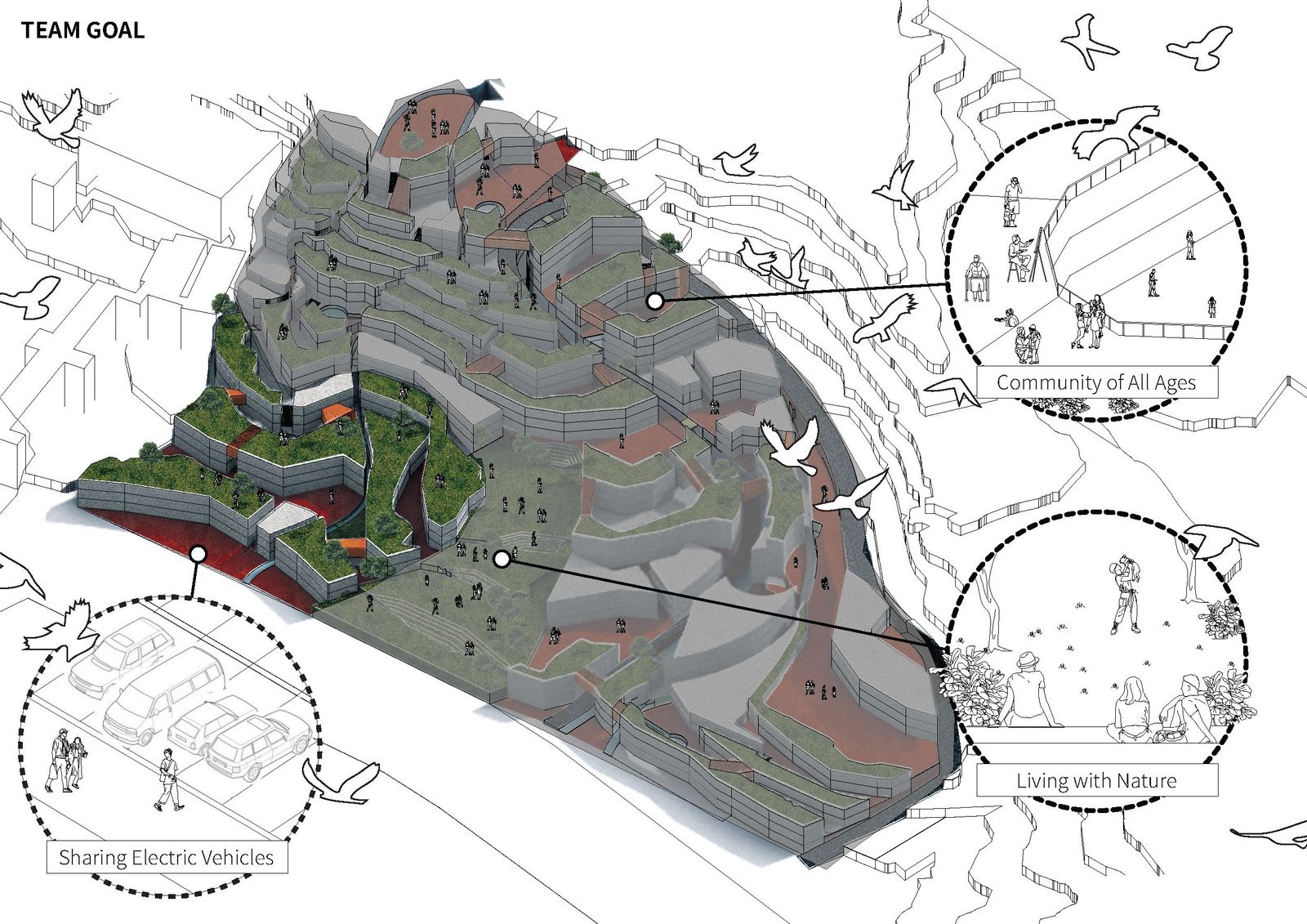
Our team goal was to create a 'Community of All Ages' where all generations can live together [cite: 3][cite_start], and to foster an environment of 'Living with Nature' by utilizing this sloped site[cite: 4]. I proceeded with the project based on this goal, and the site I chose is here.
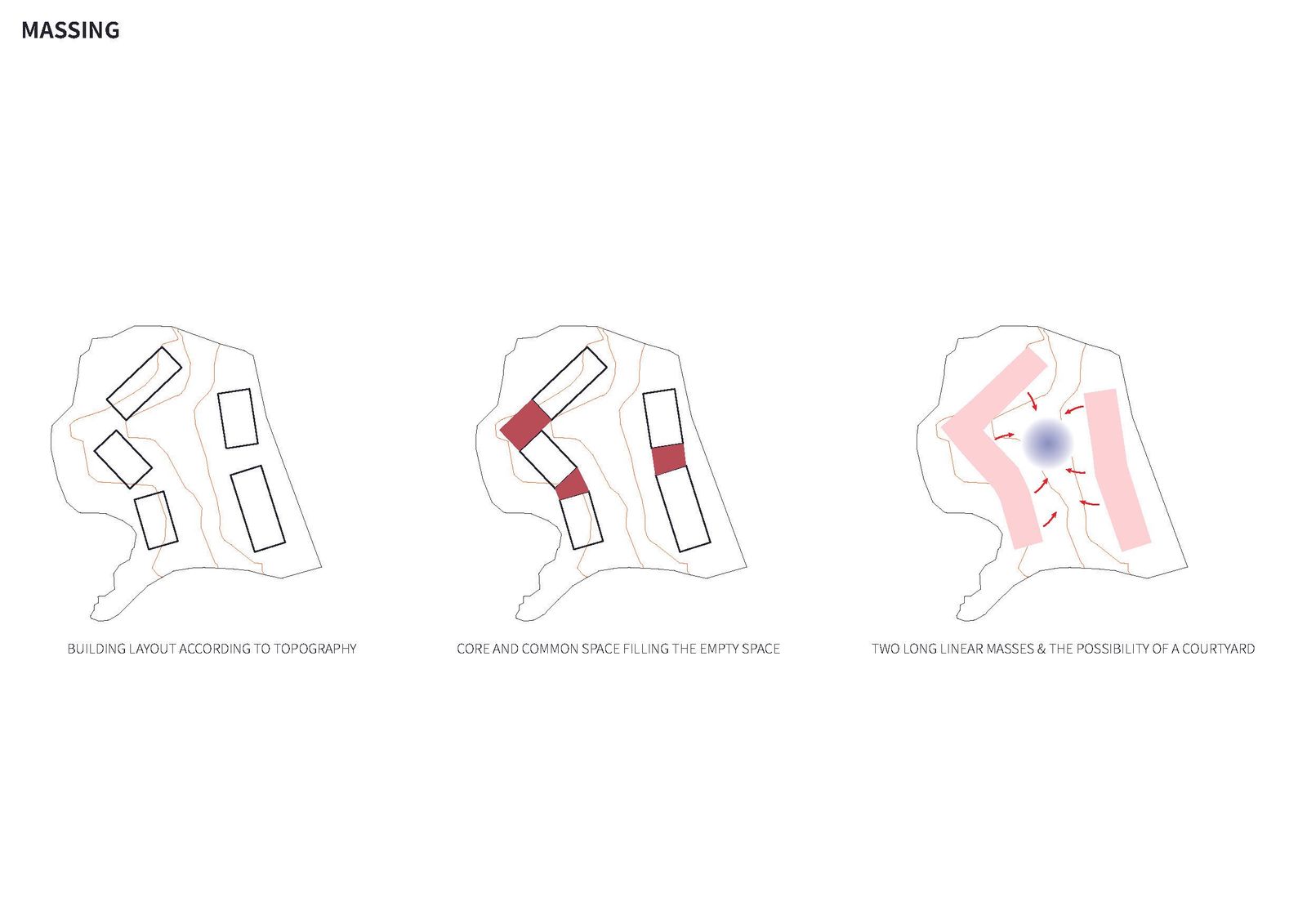
This is the massing diagram[cite: 6]. [cite_start]We followed our team's goal of 'Building Layout According to Topography'[cite: 7]. First, we placed rectangular masses on the irregular slope. [cite_start]The spaces where these masses meet were filled with the building's 'Core and Common Space'[cite: 8]. [cite_start]As a result, we created 'Two Long Linear Masses', and we confirmed the 'Possibility' for the space between them to be used as a gathering area for residents.
PLAN & SECTION
First image is Ground Floor Plan. I placed a central water feature to act as a focal point where people can naturally gather. People can move freely through this space.
Second image is Typical Plan. Yellow color is common space for residents.
Third image is Section. The building on the left shows the common space, and the right shows the residential space. The corridor in front of the residential area is also a common space for residents. In the courtyard, people can relax near the water, and the rooftops also provide spaces for gardens or smart farms, showing this is a residential space designed for community.
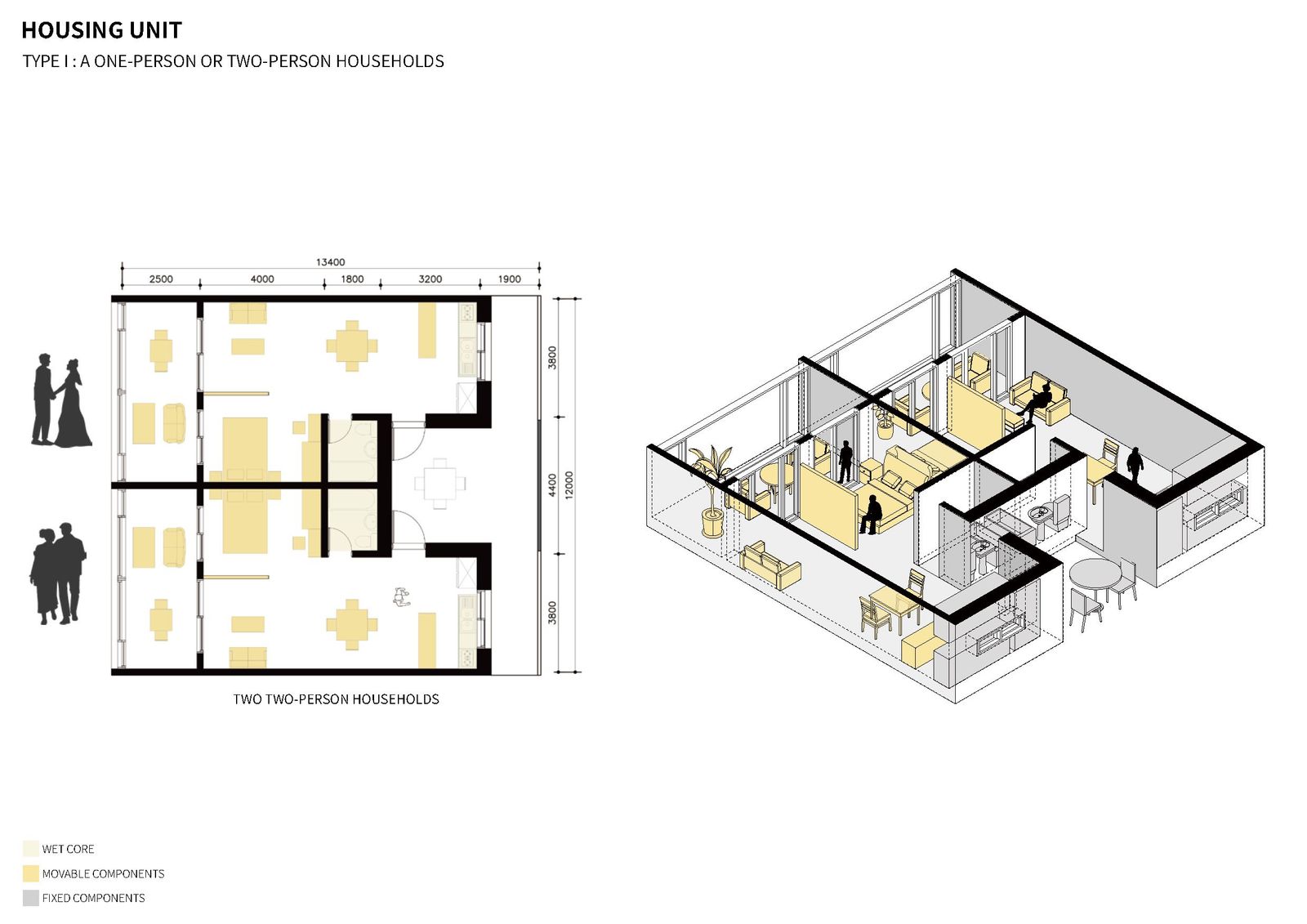
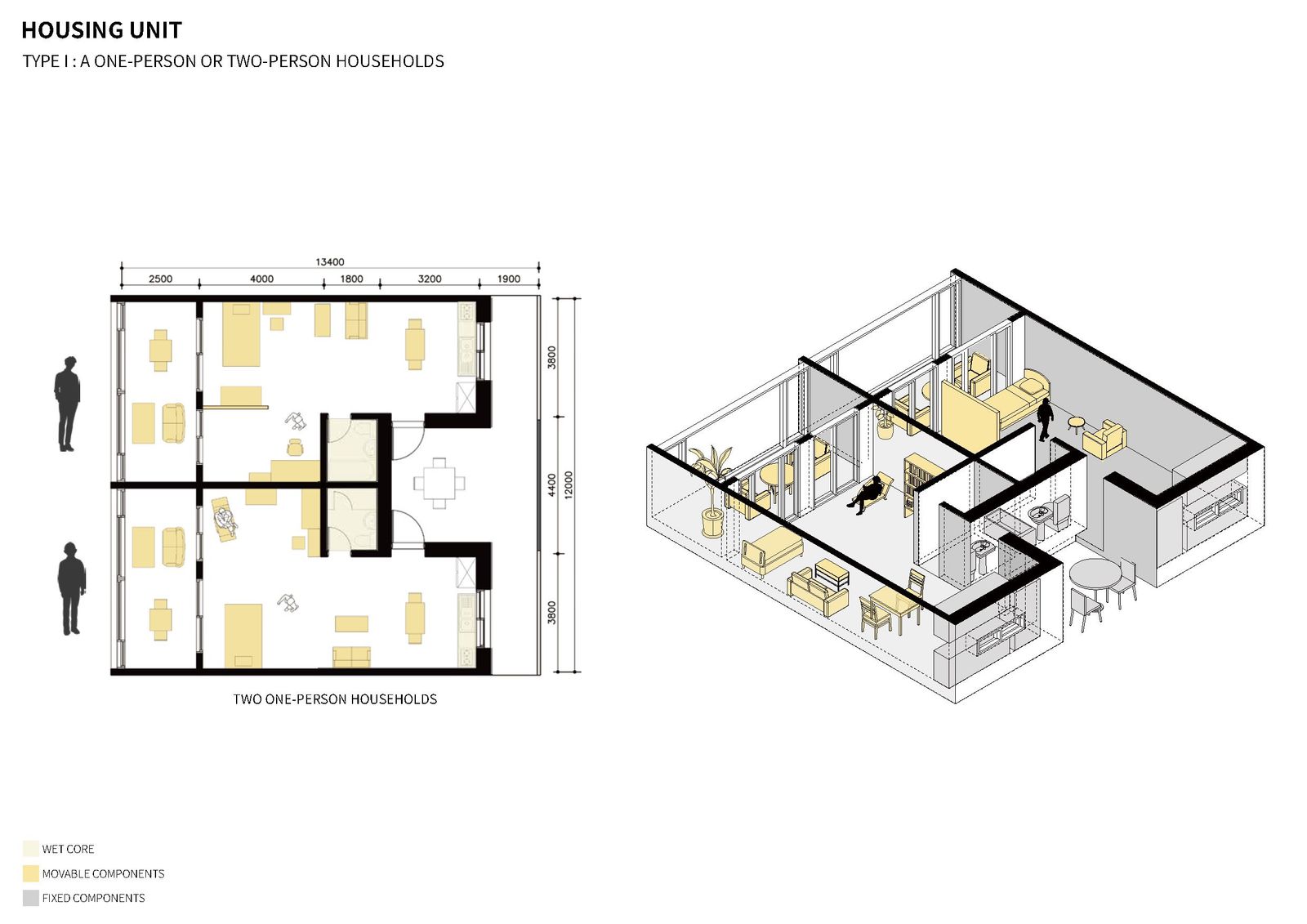
This rectangular unit can be configured for 'Two Two-Person Households', and they can meet and interact in the common corridor. This unit can also be used by 'Two One-Person Households'. Compared to the two-person layout, they can utilize a larger space more flexibly.
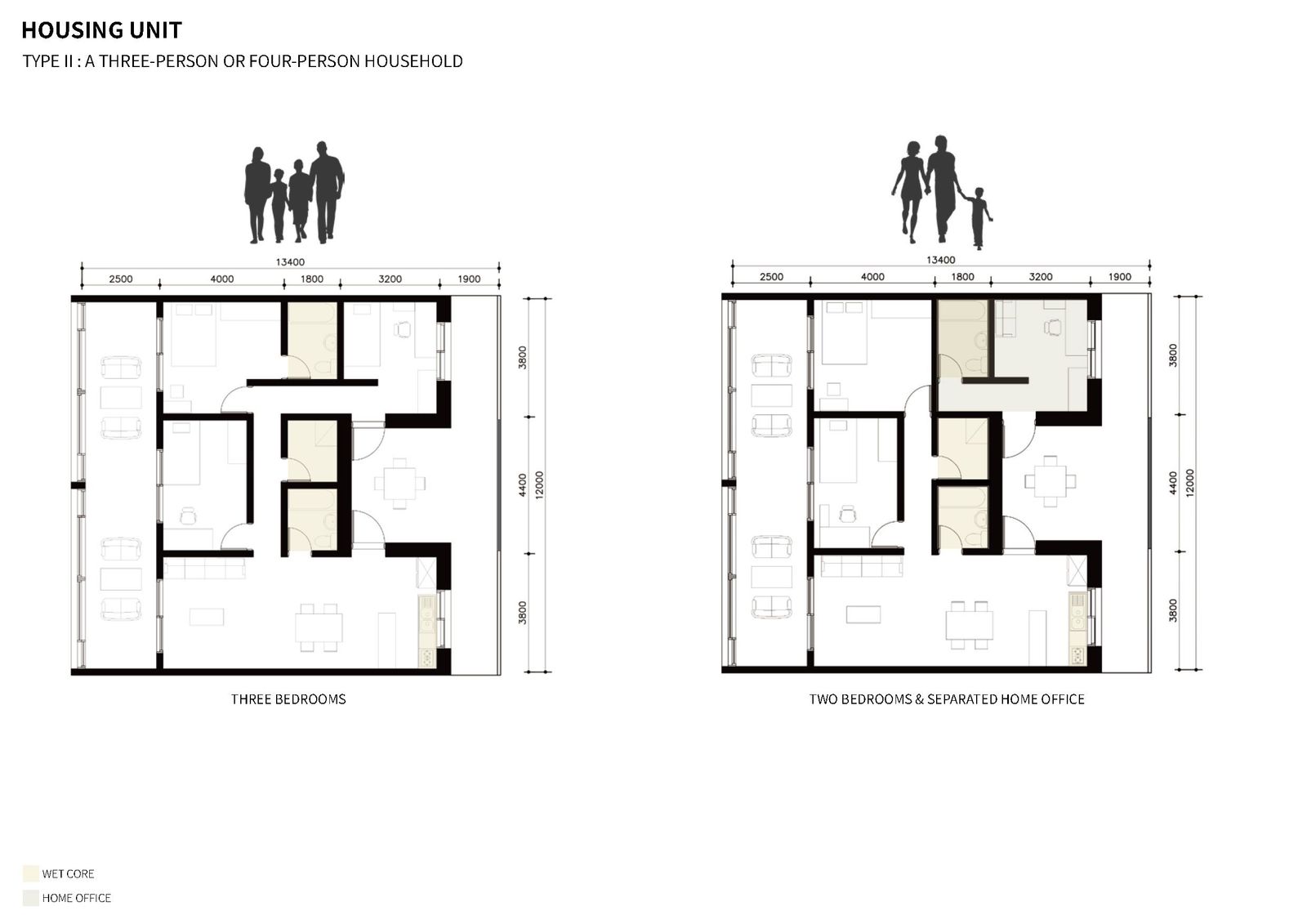
This 'Type 2' unit is an expanded version for a three or four-person household[cite: 80]. The four-person layout uses 'Three Bedrooms'. A variation for a three-person household converts one bedroom into a 'Separated Home Office'. This can be a workspace for remote work or a space for guests.
this is the 'Axonometric of Aggregation System'. As you can see, it mixes one, two, and four-person households. The four-person home has fixed spaces like 'Bedrooms', but the one and two-person units can use their 'Flexible Space' adaptably. The corridors and large 'Communal Spaces' that connect these units are the key to this project.

Copyright © uosarch.ac.kr., Some rights reserved.