
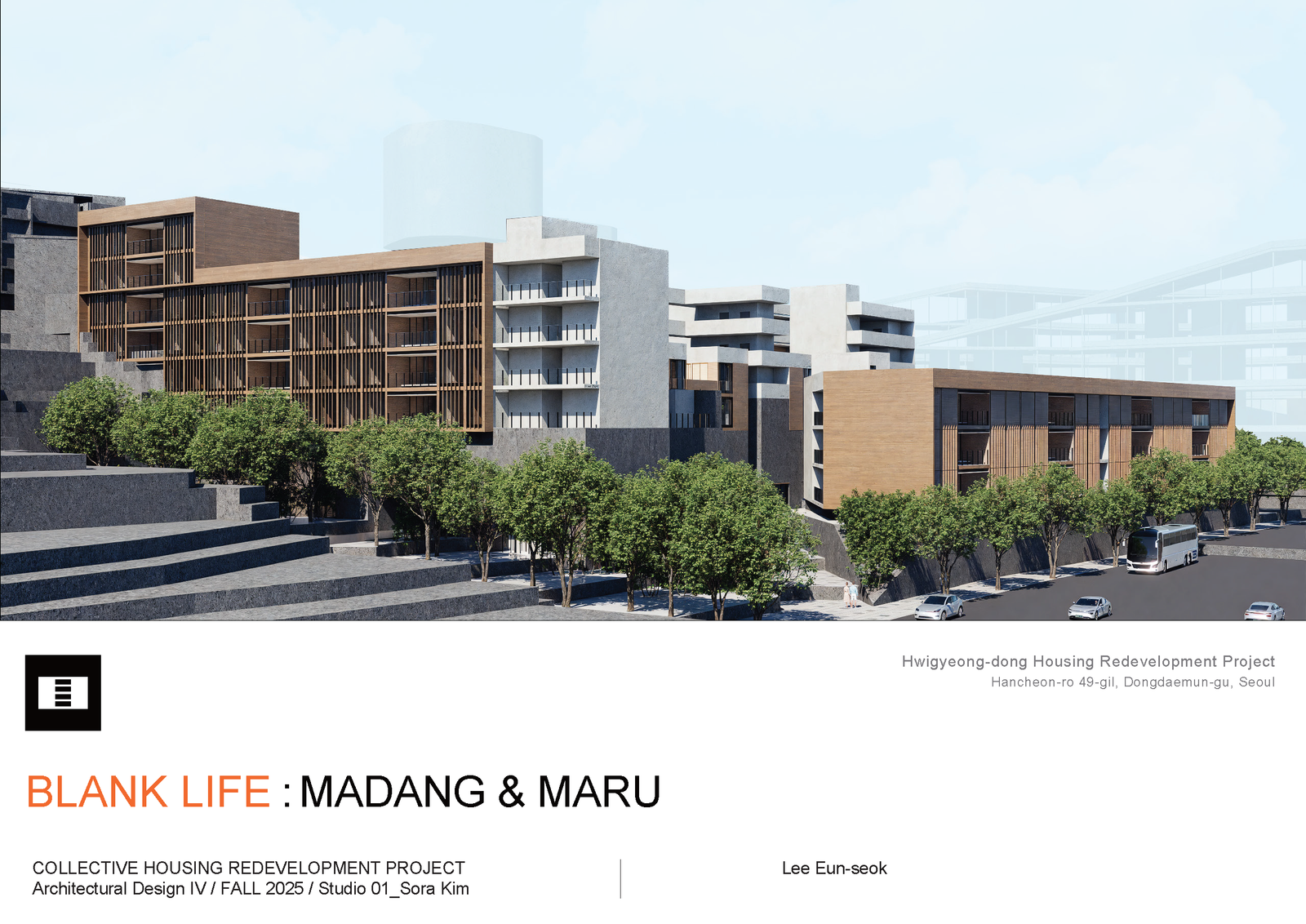
BLANK LIFE : MADANG & MARU
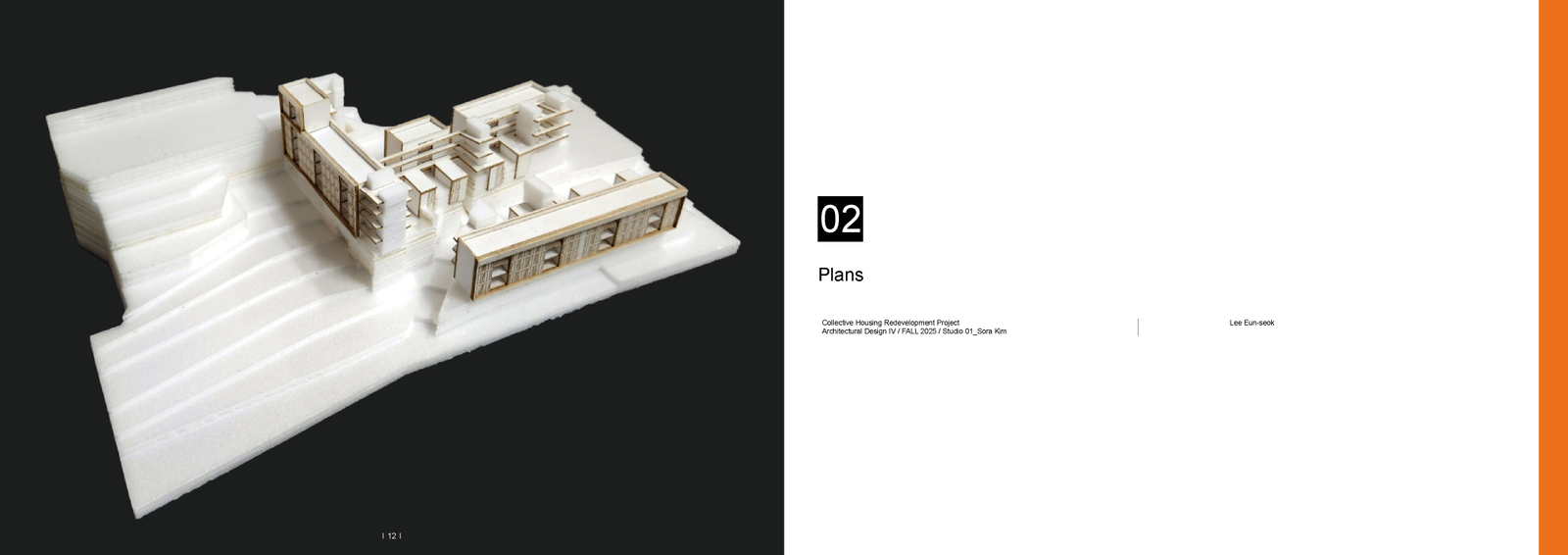
Collective Housing Redevelopment Project
Architectural Design IV / FALL 2025 / Studio 01_Sora Kim
Hwigyeong-dong Housing Redevelopment Project
Hancheon-ro 49-gil, Dongdaemun-gu, Seoul
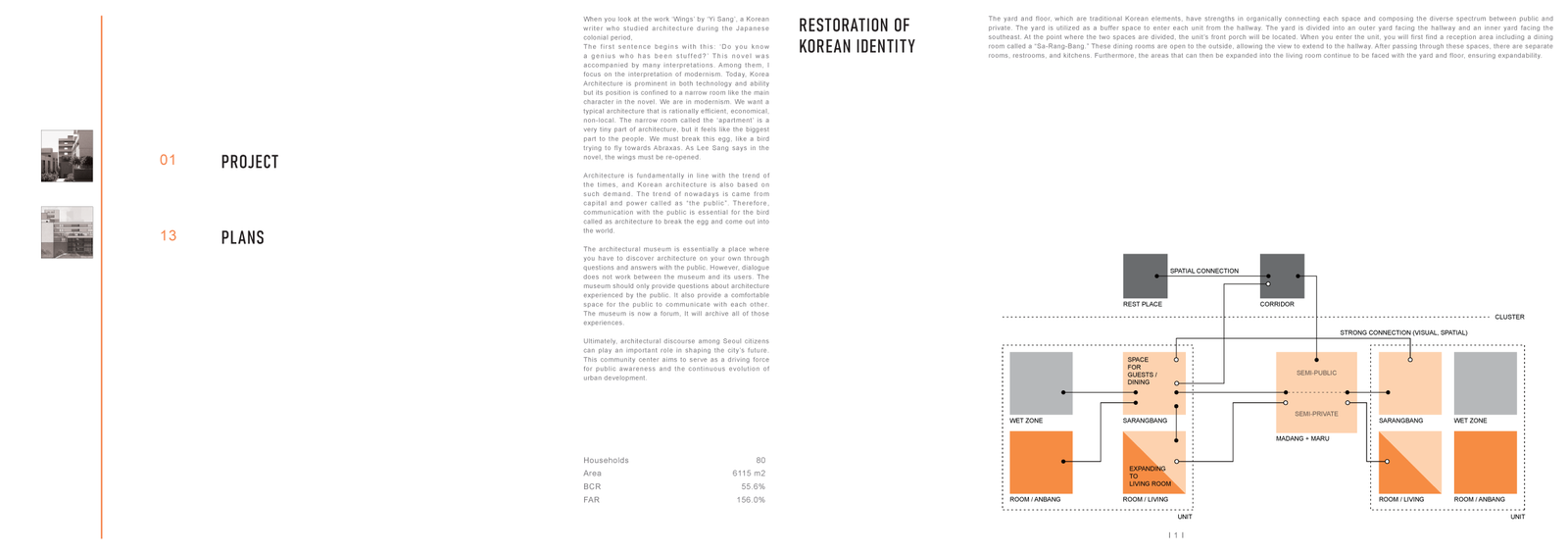
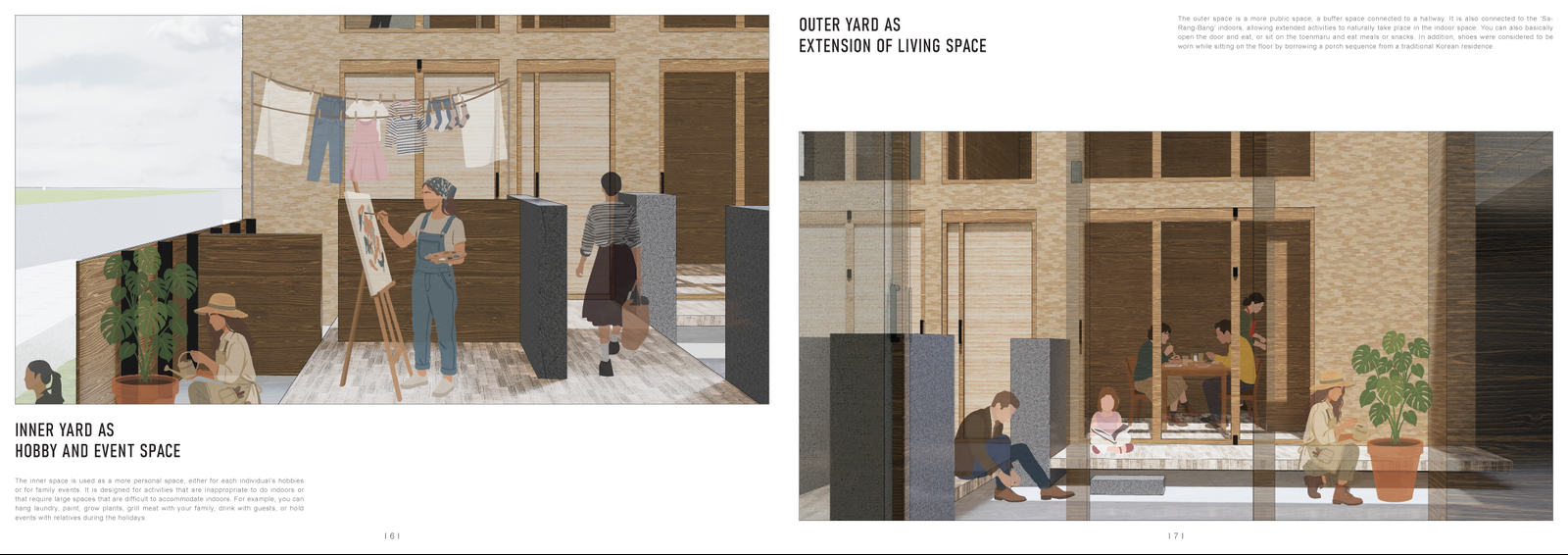
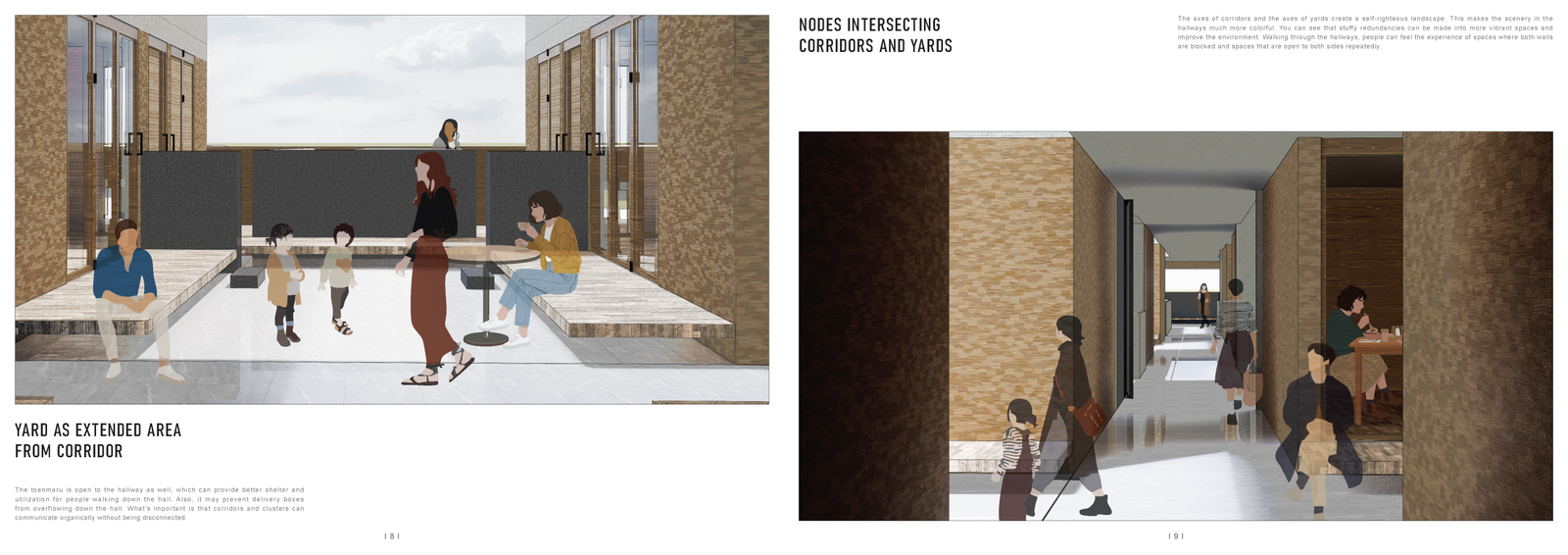
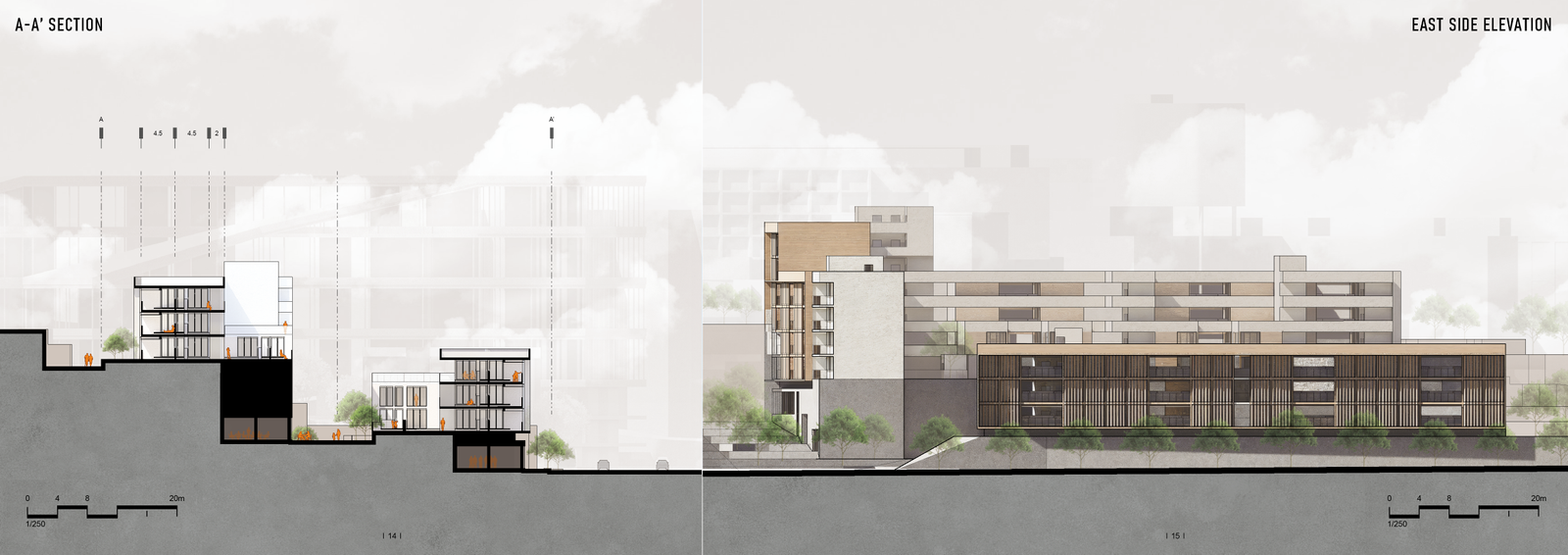
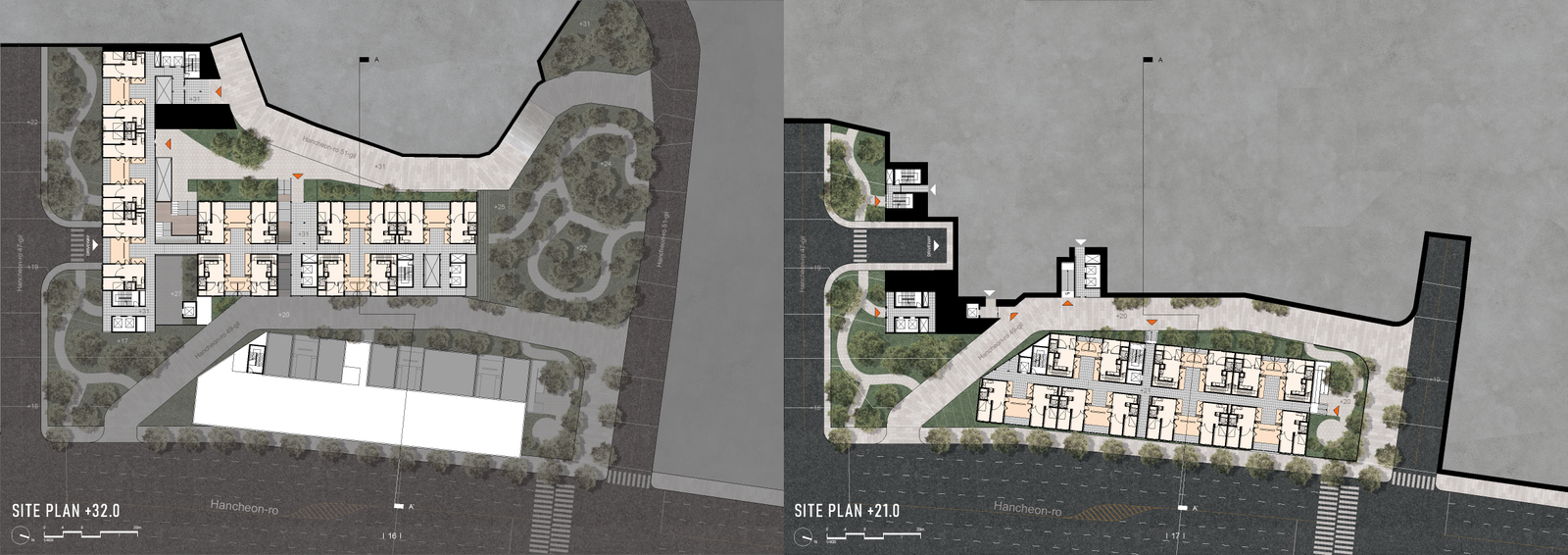
The yard and floor, which are traditional Korean elements, have strengths in organically connecting each space and composing the diverse spectrum between public and private. The yard is utilized as a buffer space to enter each unit from the hallway. The yard is divided into an outer yard facing the hallway and an inner yard facing the southeast. At the point where the two spaces are divided, the unit’s front porch will be located. When you enter the unit, you will first find a reception area including a dining room called a “Sa-Rang-Bang.” These dining rooms are open to the outside, allowing the view to extend to the hallway. After passing through these spaces, there are separate rooms, restrooms, and kitchens. Furthermore, the areas that can then be expanded into the living room continue to be faced with the yard and floor, ensuring expandability.
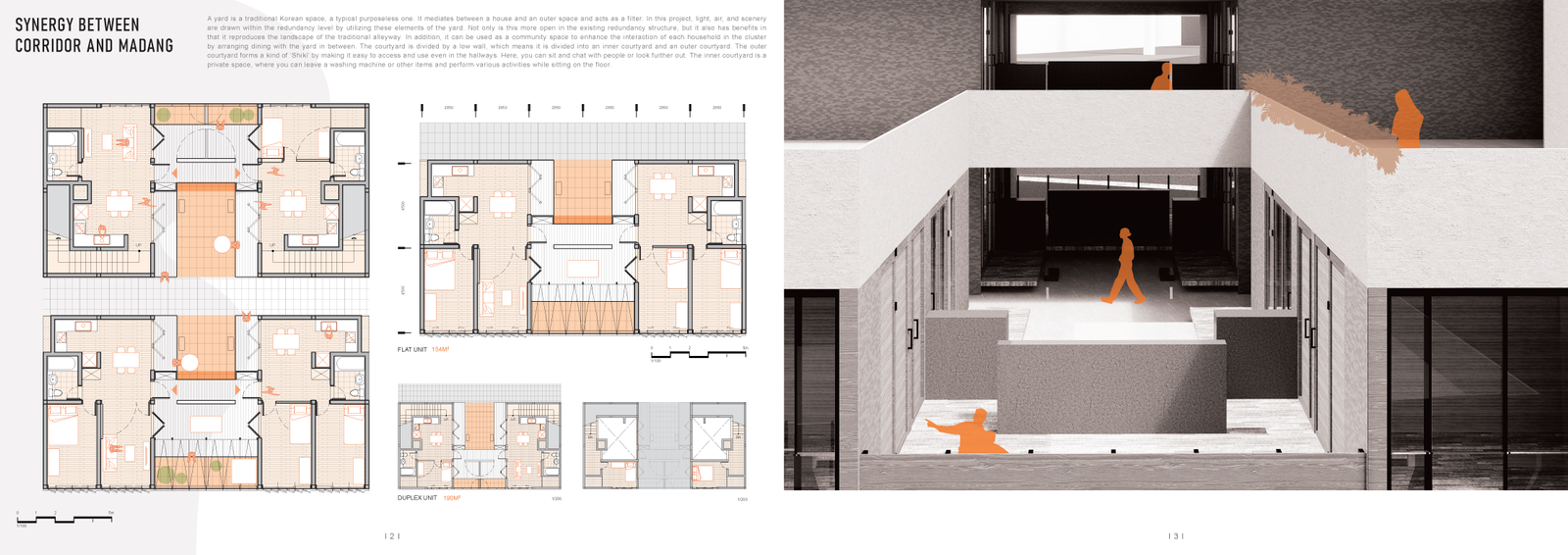
A yard is a traditional Korean space, a typical purposeless one. It mediates between a house and an outer space and acts as a filter. In this project, light, air, and scenery are drawn within the redundancy level by utilizing these elements of the yard. Not only is this more open in the existing redundancy structure, but it also has benefits in that it reproduces the landscape of the traditional alleyway. In addition, it can be used as a community space to enhance the interaction of each household in the cluster by arranging dining with the yard in between. The courtyard is divided by a low wall, which means it is divided into an inner courtyard and an outer courtyard. The outer courtyard forms a kind of ‘Shiki’ by making it easy to access and use even in the hallways. Here, you can sit and chat with people or look further out. The inner courtyard is a private space, where you can leave a washing machine or other items and perform various activities while sitting on the floor.
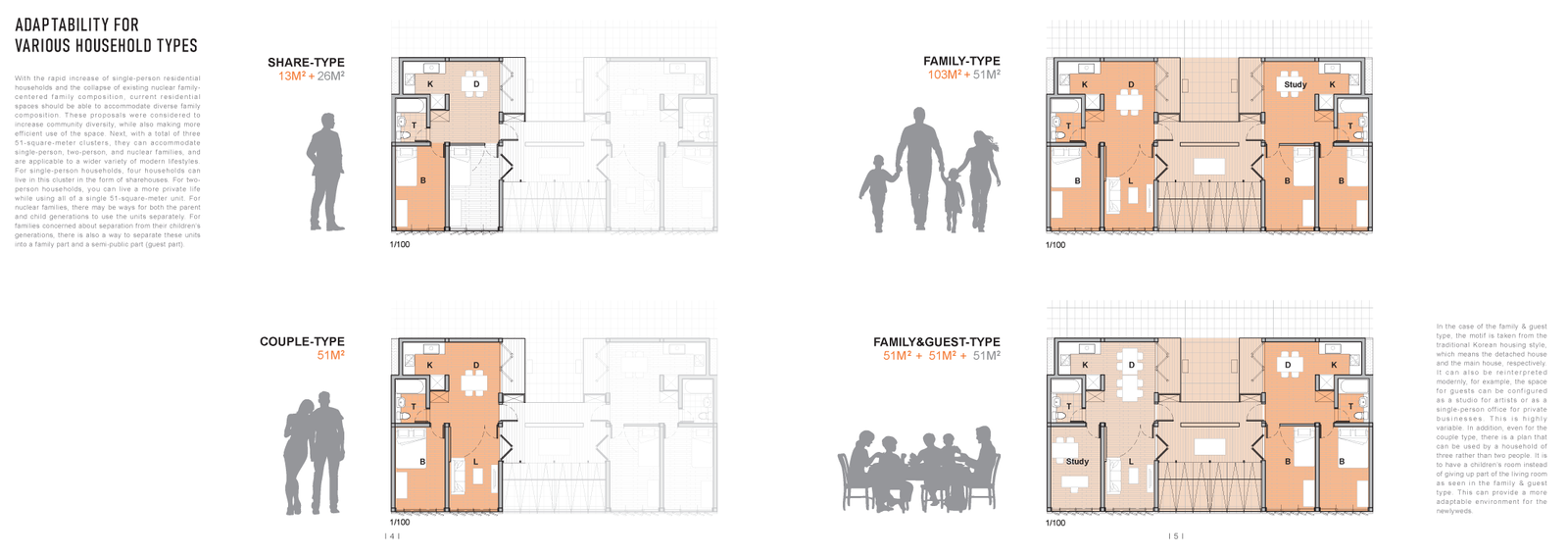
With the rapid increase of single-person residential households and the collapse of existing nuclear family-centered family composition, current residential spaces should be able to accommodate diverse family composition. These proposals were considered to increase community diversity, while also making more efficient use of the space. Next, with a total of three 51-square-meter clusters, they can accommodate single-person, two-person, and nuclear families, and are applicable to a wider variety of modern lifestyles. For single-person households, four households can live in this cluster in the form of sharehouses. For two-person households, you can live a more private life while using all of a single 51-square-meter unit. For nuclear families, there may be ways for both the parent and child generations to use the units separately. For families concerned about separation from their children’s generations, there is also a way to separate these units into a family part and a semi-public part (guest part).

Copyright © uosarch.ac.kr., Some rights reserved.